
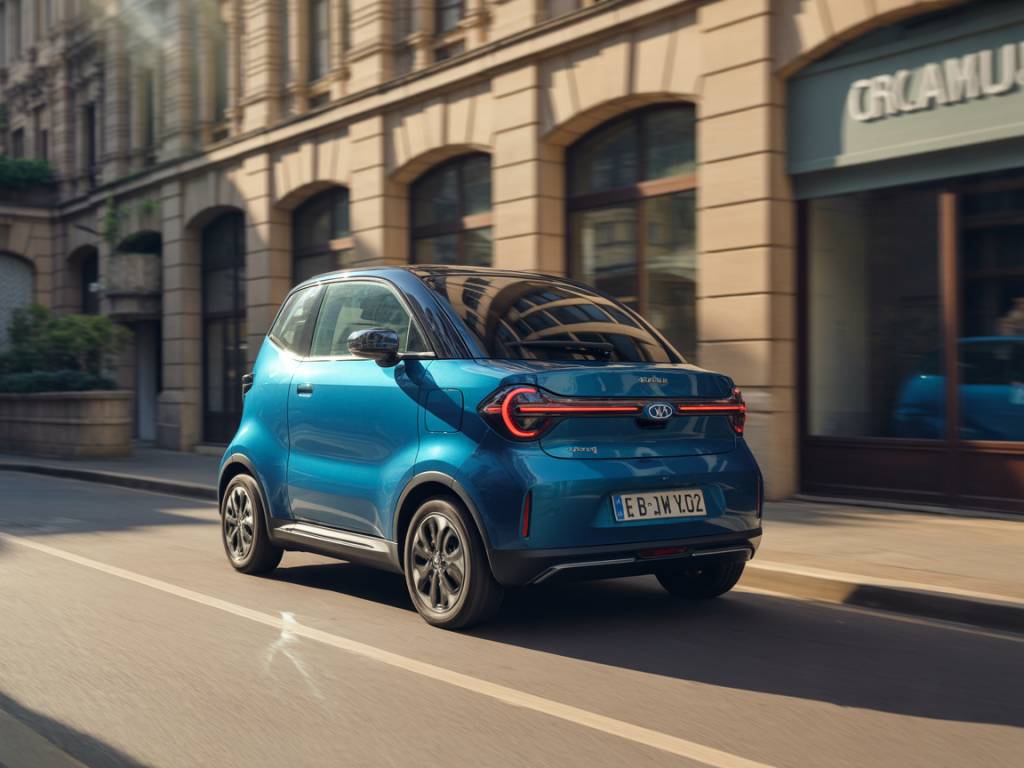
Small electric cars should be perfect for city life: quiet, nippy away from the lights, cheap to “fuel” and easy to thread into that last parking bay on a cramped side street. But some “compact” EVs are compact in name only – and a few have city-friendly style without the range or charging to back it up.
So which small EV actually makes sense if you spend most of your time in town and live with tight parking every day? Let’s look at the current stand-outs on the UK market and what they’re really like beyond the brochure.
What really matters for a city EV?
Before comparing models, it’s worth defining what “best for city life” actually means in practice. From a week of back-to-back testing in London, Manchester and Bristol, here’s what emerged as genuinely important:
- Short-length, easy to park: Under about 4.05 m makes parallel parking noticeably less stressful.
- Tight turning circle: Anything under 10.5 m feels noticeably more “go-kart” in back streets and multi-storeys.
- Real-world range of 120–170 miles: More than enough for city use, but with buffer for winter, detours and the odd motorway dash.
- Efficient at low speeds: City driving should be an EV’s sweet spot – look for low kWh/100 km figures and small-ish batteries rather than just big kWh numbers.
- Fast enough AC charging: If you rely on public 7–11 kW posts, you want a car that can take advantage of them. Some are still stuck at 7.4 kW single-phase.
- Good visibility: Big glass area, slim pillars and decent cameras/sensors matter more than 0–62 mph in town.
- Running costs & insurance: City knocks and higher premiums can quickly wipe out any saving at the plug.
With that in mind, here are the compact EVs that currently make the most sense for urban life – and which one is likely to fit your pattern best.
Fiat 500e – the urban specialist
If you want a car designed almost purely around city life, the Fiat 500e is the benchmark right now.
Key stats (42 kWh version):
- Length: 3.63 m
- Real-world range: 140–160 miles (mixed, mild weather)
- Battery: 37.3 kWh usable
- Charging: up to 11 kW AC, 85 kW DC
- Turning circle: ~9.7 m
The short length and tiny turning circle make the 500e feel like it was built for squeezing down narrow streets and into small spaces. It’s one of the few EVs where you regularly get out and think, “that was easier than in my old city car”.
In heavy traffic, the 500e is also genuinely efficient: it’s easy to see under 14 kWh/100 km if you’re not constantly flooring it. That means your real cost per mile in town stays low, even on pricier public tariffs.
What’s good in daily use:
- Excellent outward visibility – short bonnet and big glass area.
- Comfortable suspension for its size – speed bumps are handled better than many rivals.
- 11 kW AC charging option makes a real difference if your workplace or gym has decent posts.
- Interior quality feels a step above most budget city EVs.
The compromises: rear space and boot are both tight, and it’s not the car you want for four adults on a weekend away. The shorter-range 24 kWh version is best avoided unless you only ever do very short urban journeys and have a guaranteed charging point at home or at work – winter range can dip below 80 miles once you factor in heating and wet roads.
Best for: Singles or couples in dense cities who want something stylish, efficient and genuinely easy to live with in tight spaces.
Mini Electric – fun first, range second
The Mini Electric (based on the previous-generation 3-door Mini) is one of the most fun EVs to drive in town – but it asks for some compromises.
Key stats:
- Length: 3.85 m
- Real-world range: 100–120 miles
- Battery: ~28.9 kWh usable
- Charging: 11 kW AC, up to 50 kW DC
- Turning circle: ~11 m
The electric Mini feels like a hot hatch at city speeds – instant torque, well-weighted steering, and small enough to dart through gaps. If your idea of a good commute includes the occasional empty roundabout, it’s hard not to grin.
Where it works brilliantly:
- Handling and steering give loads of confidence in close quarters.
- Fast 11 kW AC charging means a near-empty to full recharge in around 3 hours on the right post.
- Cabin quality and infotainment are among the best in this size class.
The problem is simple: range. In mixed urban driving with heating or air-con on, 100–110 miles is realistic. That’s fine if you have off-street parking and a home wallbox, but can be limiting if you rely on public chargers and occasionally need to do a 70–80 mile round trip at short notice.
Also worth noting: the 3-door layout and tight rear seats make it frustrating as a family car, especially loading kids in and out on a busy street.
Best for: Drivers who prioritise fun and quality over outright practicality, and who have easy charging access.
Honda e – the city-tech showcase (used-buy territory)
The Honda e is no longer sold new in many markets, but it’s increasingly interesting on the used market, because it was designed unapologetically as a city EV – not a motorway all-rounder.
Key stats:
- Length: 3.89 m
- Real-world range: 90–120 miles (depending on wheels and driving style)
- Battery: ~28.5 kWh usable
- Charging: 6.6 kW or 7.4 kW AC (market dependent), up to 56 kW DC
- Turning circle: ~9.6 m – outstanding
The Honda e has one of the tightest turning circles of any modern car, electric or not. Multi-storey car parks and narrow streets are where it feels entirely at home. The all-digital dashboard, side-camera mirrors and airy cabin also make it feel far more spacious than its footprint suggests.
Urban advantages:
- Parking is almost laughably easy – rear-wheel drive and short overhangs help.
- Ride comfort is very good for a small car.
- Rear-wheel drive makes it feel stable and natural at speed in town.
The drawback, like the Mini, is range. Honda never pretended this was a long-distance car, and in winter with lights, wipers and heating on, 85–90 miles is not unusual. If you need to do regular 120–150 mile days, you’ll be planning your charging stops carefully.
On the plus side, used prices have been falling to the point where a tidy Honda e can undercut many newer rivals, and build quality is excellent.
Best for: Tech-focused buyers who live firmly inside the city ring road and want something distinctive and highly manoeuvrable.
Volkswagen e-Up! / Skoda Citigo-e iV / SEAT Mii Electric – tiny, efficient, and getting rare
These triplets were quietly some of the smartest city EV buys of the past few years. They’re now out of production but still very much worth seeking out used.
Key stats:
- Length: 3.54 m
- Real-world range: 110–140 miles
- Battery: ~32.3 kWh usable
- Charging: 7.2 kW AC, up to 40 kW DC (on most UK-spec cars with CCS)
They’re shorter than a Fiat 500e, boxier (which helps interior and boot space) and extremely efficient in stop-start traffic. Expect 11–13 kWh/100 km in pure city use if you drive sensibly – that’s one of the lowest real-world figures you’ll see.
Everyday strengths:
- Easy to park, with a great view out and very compact footprint.
- Back seats are usable for adults on short trips, unlike many city cars.
- Boot is small but square – better for actual stuff than some larger rivals.
Their age shows in a few ways: more basic driver aids, less impressive infotainment and slower DC charging by modern standards. But for pure city EV use, that doesn’t matter much.
Best for: Budget-conscious urban drivers hunting the used market, especially if you want minimalist tech and maximum efficiency.
Peugeot e-208 / Vauxhall Corsa Electric – compact all-rounders that still work in town
If you need your “city car” to also handle school runs, occasional motorway trips and the odd weekend away, the Peugeot e-208 and Vauxhall Corsa Electric hit a useful sweet spot.
Key stats (newer 51 kWh versions):
- Length: ~4.06 m (e-208), 4.06 m (Corsa)
- Real-world range: 180–210 miles mixed
- Battery: 48.1 kWh usable
- Charging: 11 kW AC, up to 100–115 kW DC
These aren’t as tiny as a Honda e or e-Up!, but they’re still small enough to park easily in most town bays. The pay-off is much more cabin and boot space, and a range that finally makes a weekly 60–80 mile commute plus errands a non-issue, even in winter.
In the city, they offer:
- Comfortable suspension tuned for real roads, not just test tracks.
- Plenty of punch from 0–30 mph for filtering into gaps.
- Very manageable running costs – the newer motors are impressively efficient.
They lack the tight turning circle and absolute compactness of the true city specialists, and you do feel the extra length when cramming into shorter bays. But if you only have space for one car and still live mainly in town, they’re strong candidates.
Best for: Small families or households that mainly drive in town but want one car to “do it all” without feeling cramped.
BYD Dolphin – the value wildcard
BYD’s Dolphin sneaks in at the larger end of “compact”, but it’s hard to ignore because of the value it offers – especially if you’re cross-shopping with petrol superminis.
Key stats (Comfort/Design versions):
- Length: 4.29 m
- Real-world range: 200–230 miles
- Battery: 60.4 kWh (LFP chemistry)
- Charging: up to 11 kW AC, 88 kW DC
For tight city parking it’s on the borderline – you will notice the extra length compared with a 500e or e-208. But the Dolphin comes with a big boot, loads of rear legroom and a generous spec for the money, so if your parking situation is “tight but not tiny”, it’s worth a look.
LFP batteries also tolerate sitting at high states of charge better than many NMC packs, which is handy if you can’t always plan your charging perfectly in a busy city environment.
Best for: Buyers who still need a family hatch but want strong EV value and do a lot of miles in mixed use, including town.
Key buying questions for city EV shoppers
Before choosing any specific model, here are the questions that will do more to shape the “right” choice than any spec sheet:
- Where will you charge most of the time? If you can charge at home overnight, you can be more relaxed about range and DC charging speeds. If you’re reliant on public chargers, favour:
- 11 kW AC capability (saves hours per week on kerbside posts).
- Reliable DC charging behaviour – test or research user reports, not just peak kW numbers.
- How tight is your regular parking space? If your street or car park regularly leaves you with a 3.7 m gap, a 4.2 m hatchback becomes a daily stress. Measure the space and compare with car lengths before you buy.
- How far do you really drive in a week? Add up your typical weekly mileage honestly, include one “worst case” day, then add 25–30% buffer for winter. That’s the minimum real-world range you should shop for.
- Do you need rear space and boot volume regularly? If you ferry kids and kit most days, the true city cars (Mini, Honda e, 500e) may become irritating. If 90% of your trips are solo, the opposite is true – don’t drag around 4.3 m of car you don’t need.
- What does insurance look like for your postcode? Quotes can vary wildly between small EVs even with similar list prices. Always get a real quote on the exact model and trim before deciding.
So which compact EV suits which kind of city driver?
To make this practical, here’s how I’d break it down based on real-world use, not just spec sheets:
- For ultra-tight parking and pure city use: Fiat 500e (42 kWh), Honda e, VW e-Up!/Citigo-e/Mii Electric (used).
- These are the cars that genuinely feel like “urban tools”.
- Prioritise turning circle and length over huge batteries if your daily mileage is low.
- For a fun, premium-feel city EV: Mini Electric.
- Brilliant if you have home charging and mainly short trips.
- Range is the only real Achilles’ heel.
- For one-car households in town: Peugeot e-208, Vauxhall Corsa Electric, BYD Dolphin.
- Still compact enough for most city parking bays.
- Offer enough range and space to comfortably replace a petrol supermini.
- For budget-focused buyers: Used VW e-Up!/Citigo-e/Mii, early Peugeot e-208/Corsa Electric, used Honda e if range fits your pattern.
Practical tips when test-driving a compact EV in the city
When you go for a test drive, try to replicate the awkward bits of your daily life, not the easy bits.
- Insist on trying your usual type of parking: Parallel park between two cars if that’s what you face at home. Don’t be shy about asking the dealer to let you do this on a nearby street.
- Try a tight turn in a side street or multi-storey: You’ll feel the difference in turning circle immediately. If you have to shuffle more than in your current car, note it.
- Test visibility in rain or at night if possible: Thick pillars and small rear windows are much more noticeable then than in bright daylight.
- Watch efficiency on the trip computer: On a mixed urban route, look at kWh/100 km or miles/kWh figures. Over time, 20–30% better efficiency genuinely reduces your running costs.
- Check charge-port location vs your likely chargers: Nose-mounted vs rear-quarter ports can make life easier or harder depending on how kerbside posts are laid out near you.
Compact EVs aren’t all created equal. Some are effectively shrunken versions of bigger electric hatchbacks; others are designed from the tyres up for dense, messy, real-world city life. If most of your mileage is below 40 mph and your parking space is the tightest part of your day, prioritise compactness, visibility and efficiency over chasing the biggest possible battery.
Get those basics right, and a small EV doesn’t just make city life cleaner – it makes it calmer too.