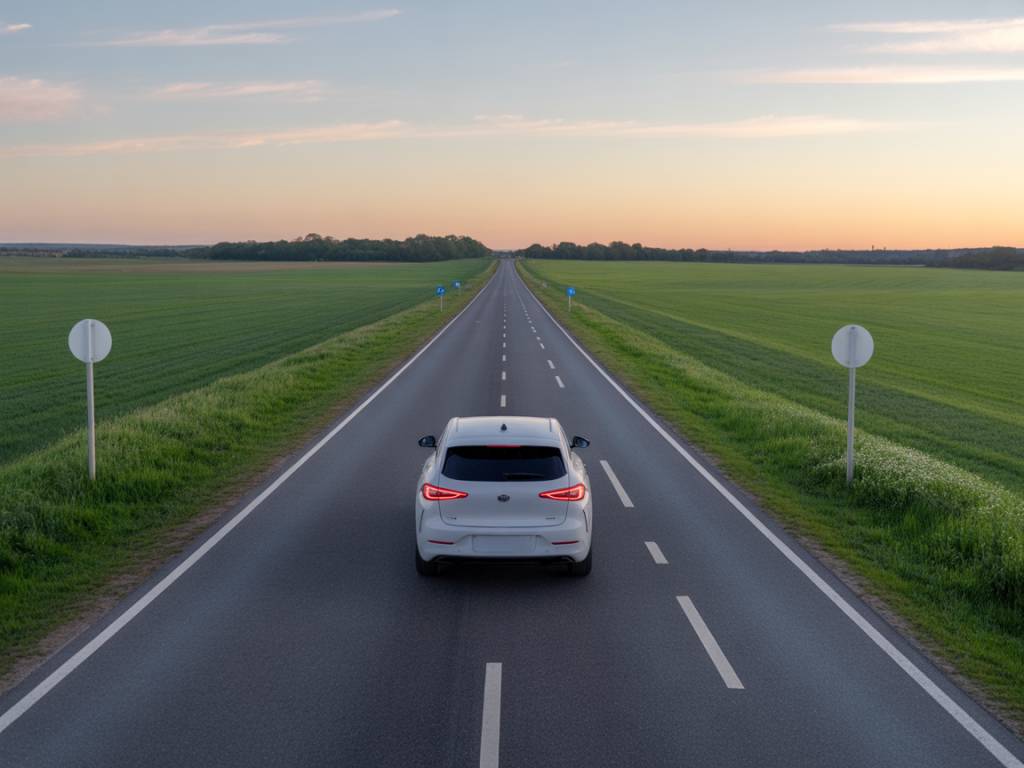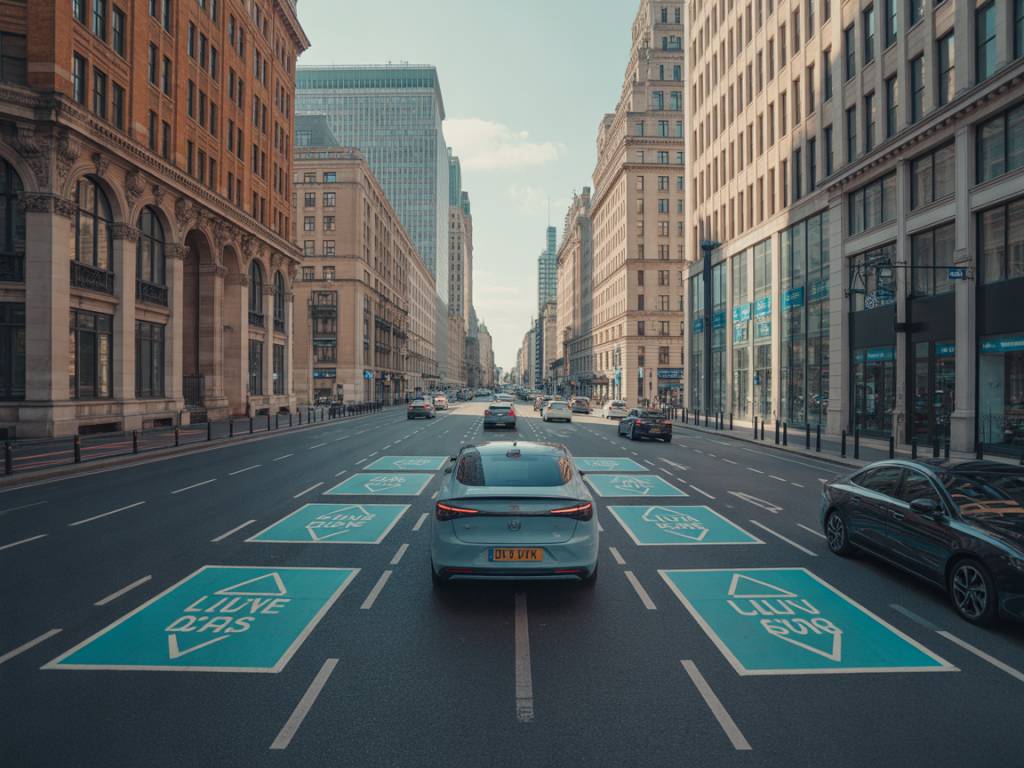
If you think “eco driving” means crawling along the motorway at 50 mph with lorries breathing down your neck, you’ve been sold the wrong idea. Driven properly, you can cut fuel use by 10–25% on everyday journeys without adding a single minute to your commute – and often arrive less stressed.
After more than a decade of testing electric, hybrid and combustion cars in real conditions, I’ve seen the same pattern over and over: the biggest fuel waste doesn’t come from the car itself, but from how it’s driven. The good news? Small, realistic changes to your driving style pay off every day – whether you drive petrol, diesel, hybrid or even an EV (where eco driving extends your range).
Eco driving: why it doesn’t mean “driving slowly”
Let’s clear up the main misunderstanding first. Going slower can save fuel, but that’s not the whole story – and on UK roads, dawdling is often unsafe and antisocial. The target isn’t “slow”, it’s “smooth”.
Most of the time, fuel is wasted in three situations:
- Hard acceleration
- Unnecessary braking (especially to a full stop)
- High-speed cruising above about 65–70 mph
Notice something? None of those are about your average speed door-to-door. They’re about how violently and how fast you change speed. If you smooth those changes out, you can often keep the same journey time while burning much less fuel.
Think of eco driving as the difference between running up a flight of stairs and walking up steadily. You’ll arrive at the top within seconds of each other, but one of you will be out of breath… and in the car, that “breath” is your fuel.
Where your fuel actually goes on a typical journey
Before we get into techniques, it helps to know what you’re fighting against. At typical UK speeds, your fuel is mainly used to:
- Overcome aerodynamic drag: air resistance climbs rapidly above 60 mph. Roughly speaking, pushing from 70 to 80 mph can increase fuel use by 20–30%.
- Overcome rolling resistance: tyres and drivetrain friction – higher with underinflated tyres or cheap low-grade rubber.
- Accelerate your car’s mass: every time you sprint up to speed, you’re investing fuel into kinetic energy… and every time you brake hard, you throw that investment away as heat.
Eco techniques target these losses, not your ability to keep up with traffic.
City and suburban driving: big gains without going slower
Stop-start traffic is where the gap between a “spiky” driver and a smooth one becomes obvious. On the same route, I’ve seen drivers in identical cars use 30–40% more fuel purely because of how they handle traffic waves and junctions.
Here’s how to keep your pace while trimming the waste.
1. Look much further ahead than you think you need to
This is the single biggest win. Don’t just look at the car in front; scan the traffic several vehicles ahead, plus the next set of lights, side roads and pedestrian crossings.
Why it saves fuel:
- You see brake lights early and can lift off the accelerator gently instead of stamping on the brakes.
- You avoid “accordion” acceleration – that pointless burst forward just before traffic bunches up again.
- You stay rolling instead of stopping completely, which uses less fuel and less clutch wear.
In many cars, simply lifting off early lets you coast in gear, using virtually no fuel on modern engines (overrun fuel cut-off), or recovering energy in a hybrid/EV.
2. Treat the accelerator like a dimmer switch, not an on/off button
Instead of “nothing–full–nothing” throttle, aim for progressive inputs:
- Accelerate briskly but smoothly up to the speed you actually intend to hold.
- Avoid stabbing at the throttle to close a small gap; gently roll into it.
- On hills, accept a tiny drop in speed instead of flooring it to maintain every mph.
Objective rule of thumb: if your passengers’ heads are nodding back and forth with every start and stop, you’re wasting fuel.
3. Keep the car moving whenever it’s safe
Pulling away from a dead stop is where cars drink the most. If you can keep even a slow crawl, you’re ahead.
- Approach red lights by easing off early and “conserving momentum”. Often, they’ll turn green before you stop.
- In queues, leave a slightly larger gap and roll slowly rather than constantly stopping and restarting.
- At roundabouts, adjust early so you arrive at a speed where you can safely slot in, instead of stopping fully and then sprinting out.
This doesn’t make you “that annoying slow car” – you’re still flowing with traffic, just without the abrupt stop–go pattern.
4. Time your approach to traffic lights
Lights are predictable once you know their rhythm. On a familiar commute, you’ll quickly notice which ones favour your direction and how long they stay red.
- See a red ahead? Ease off early and aim to arrive roughly as it changes green.
- See a green that’s been on for a while? Prepare for it to change – don’t accelerate hard into a likely red.
Executed properly, you maintain a similar average speed but with fewer full stops, fewer full-throttle starts, and a measurable fuel saving.
Motorway and A-road driving: faster is rarely quicker
On longer journeys, speed choice and consistency are king. Many drivers think 80+ mph gets them there much quicker; most of the time, it barely moves the needle on arrival time but hammers fuel use.
1. Pick a realistic cruising speed – and stick to it
A simple comparison on a 50-mile motorway stretch:
- At 70 mph, you arrive in about 43 minutes.
- At 80 mph, you arrive in about 38 minutes.
On paper that’s five minutes saved. In reality, once you add traffic, junctions and roadworks, the difference often shrinks to one or two minutes – but your fuel use can jump by 20–30% at the higher speed.
If you settle at an indicated 65–70 mph in steady traffic, you’ll often find the same aggressive drivers who blasted past you earlier reappear alongside you at the next congestion pinch point.
2. Use cruise control… selectively
On flat, free-flowing motorways, basic cruise control is your friend:
- It avoids creeping up in speed, which quietly eats fuel.
- It holds a steady throttle, which is more efficient than constant micro-adjustments.
On hilly roads, though, let the car breathe:
- On climbs, allow speed to fall a few mph instead of letting cruise floor the throttle to hold exactly 70.
- On gentle descents, let gravity do some work; you may find cruise backs off the throttle earlier than you would.
Adaptive cruise control can help smooth out speed changes in traffic, but set it sensibly so it doesn’t brake at the last second because you’ve dialled in a tiny gap.
3. Anticipate slowdowns long before the brake lights
On motorways, your eyes should live far down the road: lorry movements, bunching traffic, brake lights several hundred metres ahead.
- Ease off early as you approach congestion, using engine braking instead of heavy pedal pressure.
- Avoid charging into a queue only to brake hard; that excess speed gains you seconds at best, litres of fuel at worst.
Again, the goal isn’t to be the slowest – it’s to be the one who doesn’t waste energy rushing to the back of a traffic jam.
Using your car’s tech (without falling for the marketing)
Modern cars are full of “eco” promises. Some of these genuinely help; others are mainly there for the brochure. Here’s what actually makes a difference day to day.
Eco driving modes
Most Eco modes do three things:
- Soften throttle response (you get less power for the same pedal movement)
- Optimise gear shifts (automatic boxes upshift earlier to drop revs)
- Dial back air conditioning and other energy-hungry systems
That can easily save a few percent in fuel, especially if you have a heavy right foot. The catch? Some Eco modes are too lazy for situations like quick motorway joins or overtakes.
Practical approach:
- Use Eco in town and on gentle cruising.
- Switch to Normal or Sport briefly if you need a decisive overtake or short, sharp burst.
Start–stop systems
Automatic engine stop at lights is genuinely useful in urban traffic, where you can spend 15–25% of your journey time stationary. Over a year, that adds up.
Just be aware:
- Very short stops (under 5–10 seconds) bring limited benefit.
- If it annoys you in dense stop–go, don’t be afraid to switch it off temporarily – driver stress isn’t worth a tiny theoretical saving.
Tyre pressures and type
Underinflated tyres can increase fuel use by 3–6% and wear faster. That’s free money you’re burning.
- Check pressures at least once a month and before long trips, adjusting to the manufacturer’s label (often on the door pillar).
- If you’re replacing tyres, “eco” or low rolling resistance options can genuinely help – but avoid rock-hard budget tyres that compromise grip in the wet. Economy isn’t worth a crash.
Hybrids and EVs: regen done right
If you drive a hybrid or EV, eco driving is about minimising braking – including regeneration. Yes, regen recovers energy, but not 100% of what you put in when accelerating.
- Use “one-pedal” or high-regen modes in town to manage speed with the accelerator rather than on–off braking.
- On steady A-roads and motorways, a lower regen setting can allow more genuine coasting, which is often more efficient.
The golden rule: recovering energy is good; not wasting it in the first place is better.
Route and trip planning: eco driving before you turn the key
There’s a chunk of fuel saving you can lock in before you even start the engine.
Choose the “right” fast road, not just the fastest on paper
- A slightly longer route with steady 50–60 mph flow can beat a “shorter” one clogged with stop–start traffic.
- Sat-nav systems with “eco” routing are getting better; test them on your regular journeys and see if the suggested route really is calmer and more consistent.
Avoid cold-start short hops when you can
Engines are at their thirstiest in the first few minutes from cold. If you can batch errands into one slightly longer trip rather than multiple short ones, you’ll see the difference in fuel consumption and engine wear.
Lighten the load and clean up the aero
- Empty the boot of heavy junk you carry “just in case”. Every extra 50 kg raises fuel use.
- Remove roof boxes and racks when you’re not using them – the aerodynamic penalty at speed is huge.
You won’t feel the difference on a single drive, but over months it quietly improves your mpg and handling.
Eco driving myths that deserve to die
There’s a lot of bad advice floating around; some of it used to be true in the 80s, much of it never was.
“Coasting in neutral saves more fuel.”
On modern fuel-injected engines, lifting off the throttle in gear at speed usually cuts fuel injection to almost zero. In neutral, the engine still burns fuel to idle. Staying in gear is normally more efficient and safer, because you retain engine braking and instant power if you need it.
“You have to drive really slowly to save fuel.”
Not true. Driving at a steady, realistic speed with smooth inputs often beats crawling in the wrong gear or constantly speeding up and slowing down. The aim is “efficient pace”, not “being a rolling roadblock”.
“Bigger engines are always worse.”
An overworked small turbo engine can be thirstier than a larger, unstressed one doing the same job, especially at motorway speeds. What matters more is gearing, driving style and how often you need full power.
Simple checklist: habits that genuinely save fuel without slowing you down
If you remember nothing else, keep this mental checklist in mind next time you drive:
- Look far ahead: plan for what’s happening 5–10 seconds down the road, not just the next car’s bumper.
- Be smooth: gentle, progressive acceleration and braking instead of sharp bursts and stabs.
- Keep rolling: avoid full stops when it’s safe by easing off early and “surfing” traffic flow.
- Hold a realistic speed: around 65–70 mph on motorways is usually the sweet spot between time and economy.
- Use your tech wisely: Eco modes, cruise control and start–stop help when used in the right context.
- Maintain the basics: correct tyre pressures, regular servicing and a de-cluttered car all quietly improve efficiency.
- Plan your trips: choose steadier routes when possible and combine short journeys.
None of these require you to become a rolling chicane or radically change your life. They’re small, practical adjustments that stack up. Over a year of commuting, family trips and supermarket runs, they can mean:
- Fewer fuel stops and lower monthly bills
- Less wear on brakes, clutch and tyres
- A calmer, more predictable drive for you and your passengers
And perhaps the nicest side-effect: once you get used to this smoother, anticipative style, the old habit of rushing between red lights starts to feel as pointless as it really is. You’ll still arrive on time – you’ll just keep more money in your tank and a bit more life in your car while you’re at it.