
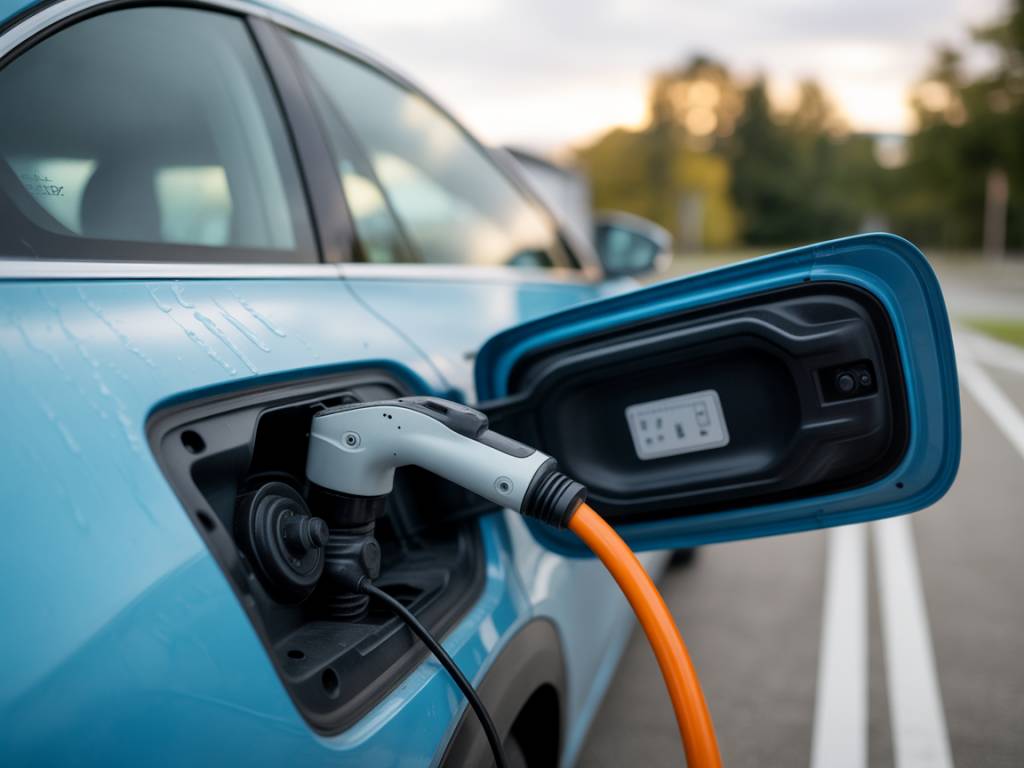
Electric cars promise lower running costs and less faff at the garage. Petrol cars, on the other hand, are familiar, well-understood and every mechanic on the corner knows what to do with them. But when it comes to maintenance, what really changes for you as a driver?
After more than a decade of testing both EVs and petrol cars in real life – winter motorway slogs, school runs, city traffic – one thing is very clear: the checklist in your glove box doesn’t look the same. Some items disappear entirely, others become more important, and a few catch many new EV drivers by surprise.
Let’s break down the essential maintenance differences that actually matter to your time, your budget and your peace of mind.
The big picture: what needs servicing – and what doesn’t
Think of a petrol car as a machine full of controlled explosions. A lot of parts are there just to feed, cool, clean and manage those explosions. An electric car skips all of that.
Here are the systems you can forget about with an EV:
- Engine oil and oil filter
- Fuel system (injectors, fuel pump, fuel filter)
- Exhaust system (muffler, catalytic converter, particulate filter)
- Spark plugs, ignition coils
- Clutch (on manuals) and often complex gearboxes
What remains – and needs just as much attention on both EVs and petrol cars:
- Tyres
- Brakes (with a big twist for EVs – we’ll get to that)
- Suspension & steering components
- 12V battery and electrical accessories
- Cabin filters, wiper blades, lights, door locks, etc.
And finally, the EV‑specific items:
- High-voltage battery health and cooling
- Power electronics (inverter, charger)
- Software and firmware updates
So yes, the workshop checklist gets shorter with an EV – but it doesn’t disappear. If a dealer tells you an electric car is “maintenance free”, they’re selling you a fantasy, not a car.
Service intervals and cost: how much do you really save with an EV?
Most petrol cars still follow a 12 months / 10,000–15,000 miles service pattern, sometimes stretched to 2 years / 20,000 miles on newer models. Every one of those visits involves engine oil, filters and a lot of time spent under the bonnet.
EVs simplify this. In practice, for the major brands I test, you typically see:
- Service intervals at 2 years or 18,000–25,000 miles
- Shorter job lists: checks, filters, brake fluid change when due, software updates
- Labour times often 30–50% lower for routine services
Translated into real money, across the UK and Europe you commonly see EV servicing at:
- Roughly half the price of equivalent petrol servicing over 3–5 years,
- Especially if you drive high mileage and would otherwise burn through oil changes.
Where’s the catch? There are two to keep in mind:
- Out-of-warranty repairs on high-voltage components can be expensive (though rare so far).
- Some dealers are still “inventing” big service packages for EVs that don’t reflect the actual work required. Always ask for a detailed quote listing each task.
As a rule, if you keep your car for 5–10 years, an EV will almost always win the maintenance-cost battle against a petrol model, even before fuel savings.
Fluids: from oil changes to… almost nothing
This is where petrol vs electric feels very different in your maintenance diary.
On a typical petrol car, you live with:
- Engine oil & oil filter change every 10,000–20,000 miles
- Coolant for engine and often for the turbo
- Transmission oil (manual/automatic), usually every 40,000–60,000 miles or “lifetime” (which is rarely your car’s actual lifetime)
- Occasional power steering fluid changes (on older models)
On an EV, the fluid list shrinks dramatically:
- No engine oil, no oil filter, no fuel system cleaners
- Coolant remains – but it’s usually for battery, inverter and motor, with longer change intervals
- Gearbox oil exists, but the gearbox is far simpler; many manufacturers treat it as long-life or check-only
- Brake fluid still needs changing periodically (typically every 2 years)
So in day-to-day ownership, you go from “another oil change already?” to “cabin filter, brake fluid… and that’s about it”. That’s not just cheaper, it’s less hassle booking half‑days off work for garage visits.
Brakes: why EVs can make discs rust while saving you money
Petrol cars rely on friction brakes almost all the time. When you slow down, you wear pads and discs, turn that kinetic energy into heat and dust, and eventually get a bill.
Electric cars mostly slow down using the motor itself in reverse – regenerative braking. That energy goes back into the battery instead of into the atmosphere as heat. The side effects:
- Massively reduced brake wear: It’s not unusual to see pads last 60,000–100,000 miles on an EV if most driving is urban or mixed. Some taxi fleets report original pads still fine past 150,000 miles.
- Less brake dust: Wheels stay cleaner, and local air quality gets a tiny bonus.
- Rust risk increases: Because the pads and discs are used less, they can corrode, especially in damp climates or if the car sits for long periods.
That last point matters. I’ve seen cars with plenty of pad material left, but discs so rusty they needed replacement at MOT. The fix is simple:
- Once a week, especially if you do a lot of city driving with strong regen, deliberately use the friction brakes:
- Turn regen down (if your car allows it) and perform a few firm, safe stops from 40–50 mph to clean the discs.
For petrol car owners, the routine is the opposite: expect more regular pad and disc changes, but less worry about corrosion from underuse.
Tyres: EVs are heavier and hungrier
This is one of the few areas where EVs can cost more to maintain than petrol cars.
Reasons:
- EVs are heavier due to the battery pack.
- Instant torque can chew through front tyres if you enjoy brisk acceleration.
- Many EVs use low-rolling-resistance, EV-specific tyres that can be pricier.
In testing, I regularly see:
- Front tyres on torquey EVs needing replacement 10–20% sooner than on comparable petrol models.
- Rear tyres lasting similarly or longer, depending on drive layout and driving style.
But you have levers you can pull:
- Choose sensible wheel sizes: giant 20–21″ wheels look great in the showroom and eat tyres (and range) in the real world.
- Rotate tyres as per the manufacturer’s recommendations to even out wear.
- Keep tyre pressures checked – underinflation hits both range and longevity.
For petrol cars, the pattern is more traditional: slightly longer average life, more tyre options and generally lower prices per tyre, especially on smaller wheels. Still, the same basics apply: alignment, pressure and rotation save money, regardless of drivetrain.
Battery care vs engine wear: thinking in years, not months
A petrol engine slowly wears out with every cold start, every high‑rpm run, every missed oil change. It’s a mechanical process. You manage it with good servicing, decent oil and not abusing the car from stone cold.
An EV’s “engine” – the electric motor – is much simpler and, in practice, far more durable. What matters instead is the high‑voltage battery.
Modern batteries are holding up better than early critics predicted, but you still need to understand the basics:
- Fast charging is a tool, not a lifestyle: Occasional rapid charges are fine; living at a 150 kW charger will accelerate battery degradation.
- Avoid living at 100% state of charge: Charging to 80–90% for everyday use is usually healthier for the pack; save full charges for long trips.
- Don’t let it sit empty: Leaving an EV parked for weeks at 0–5% is harder on the battery than at 40–60%.
From a maintenance standpoint, you’re not “servicing” the battery in the same way you service an engine. What you do instead is:
- Let the car apply software updates that often refine battery management.
- Follow any manufacturer checks on battery cooling circuits or pack health during scheduled services.
- Keep an eye on range trends over years, just as you’d listen for new noises on a high‑mileage petrol engine.
With petrol cars, by contrast, you manage engine longevity more directly with regular oil changes, timing belt or chain replacement, cooling system care and so on. Skip these and you can literally destroy the engine. Skip EV battery best practices and you mostly “pay” in slightly faster range loss, not sudden catastrophic failure.
Exhausts, emissions systems and MOT reality
On a petrol car, the exhaust system is both a maintenance item and a legal requirement. Over time you face:
- Exhaust back boxes and pipes corroding (especially in salted winter climates)
- Catalytic converters being stolen or failing
- Oxygen sensors and emissions-related fault codes
- For newer petrols: particulate filters that can clog with too much short-trip use
Every one of these can trigger MOT failures, dashboard lights and unwelcome invoices.
An EV has no exhaust, no catalytic converter, no particulate filter, no lambda sensors. That’s a whole system – and a common MOT headache – gone.
So at test time, what differs?
- On a petrol car, MOT includes emissions testing and scrutiny of the exhaust system.
- On an EV, focus is on brakes, suspension, tyres, steering, lights and structure – the same physical safety items, minus emissions checks.
Result: fewer ways for an EV to fail solely due to the powertrain. Most issues are classic wear‑and‑tear that you can spot in advance with basic checks.
Software, diagnostics and who can work on your car
Both EVs and modern petrol cars are rolling computers, but the balance shifts with an electric drivetrain.
On a petrol car:
- Engine management is complex, but independent garages have decades of experience and relatively affordable diagnostic tools.
- Many jobs still require good old-fashioned mechanical skills more than corporate software access.
On an EV:
- More functions live in software: charging behaviour, battery management, driving modes, even brake feel.
- Some updates arrive over the air; others require a dealer visit.
- High‑voltage work is restricted to trained technicians with specific safety gear.
In practice, this means:
- Routine items (tyres, suspension, brakes, cabin filters) can still be handled by independent garages.
- Anything involving the battery pack, power electronics or high‑voltage cabling is best left to trained specialists – and may tie you more to the dealer network during the warranty period.
For petrol owners, the independent repair ecosystem is more mature and often cheaper, especially on older vehicles. For EVs, that ecosystem is catching up fast, but brand and model choice can still dictate how easy or expensive out-of-warranty fixes may be.
Everyday habits that extend life on both EVs and petrol cars
Regardless of what powers your car, a few habits pay off over years:
- Warm up gently: on a petrol car, avoid heavy throttle until the engine is up to temperature; on an EV, hard launches on a cold battery also stress the system and can temporarily limit power.
- Listen and feel: knocks over bumps, vibrations, pulling to one side – these are universal warning signs.
- Wash the underside occasionally if you live near the sea or in areas where roads are salted; rust does not care about fuel type.
- Stick to a simple record: keep receipts for tyres, services and any repairs; it protects your warranty and adds value when you sell.
For EV owners specifically:
- Use scheduled charging to keep the battery between roughly 20–80% most of the time.
- Check for software updates – they can improve efficiency, range estimates and even driving feel.
- Exercise the friction brakes periodically to prevent corrosion.
For petrol owners specifically:
- Don’t skip oil changes, even if you drive very low mileage; old oil ages with time, not just miles.
- If most of your driving is very short trips, consider an occasional longer run to properly warm up the engine and exhaust.
- Pay attention to timing belt or chain recommendations; belt failures are often terminal for the engine.
So which is “easier” to live with long term?
If your main concern is how often you’ll see the inside of a workshop and how painful the bills will be, the pattern is fairly consistent:
- EVs: Fewer regular service items, lower routine costs, but expensive outlier repairs possible if major components fail outside warranty. Tyres and battery care deserve attention.
- Petrol cars: More frequent maintenance, more moving parts to wear out, but a deep, competitive repair network and lots of available parts at many price points.
For most drivers covering average to high mileage, an EV will strongly reduce maintenance hassle and cost compared with a modern petrol car. For low-mileage drivers who keep cars for a very long time, the answer is closer – it then depends heavily on the specific model, warranties and how you look after it.
The key is not to treat EVs as mysterious or magical. Underneath the high‑voltage orange cables and the marketing gloss, they are still cars: four tyres, brakes, suspension, fluids, and real‑world wear and tear. Understand what is genuinely simpler, what simply shifts from spanners to software, and you will be better prepared – whichever fuel you choose.