Electric vs plug-in hybrid: start with how you actually drive
If you’re hesitating between a fully electric car (EV) and a plug-in hybrid (PHEV), don’t start with the brochure range or the 0–62 mph figures. Start with your week.
Where do you drive? How often? How far? Where do you park at night? These four questions decide far more than headline battery size or fuel economy claims.
In this guide, we’ll look at how EVs and PHEVs really behave in two very different worlds: mainly urban driving and mostly rural or mixed long-distance use. We’ll keep it practical: charging, real costs, reliability, and what actually happens after three winters of commuting in the rain rather than on a sunny press launch.
Key differences in one paragraph
Very simply:
- Fully electric car (EV):
– Only electric motor(s), powered by a battery.
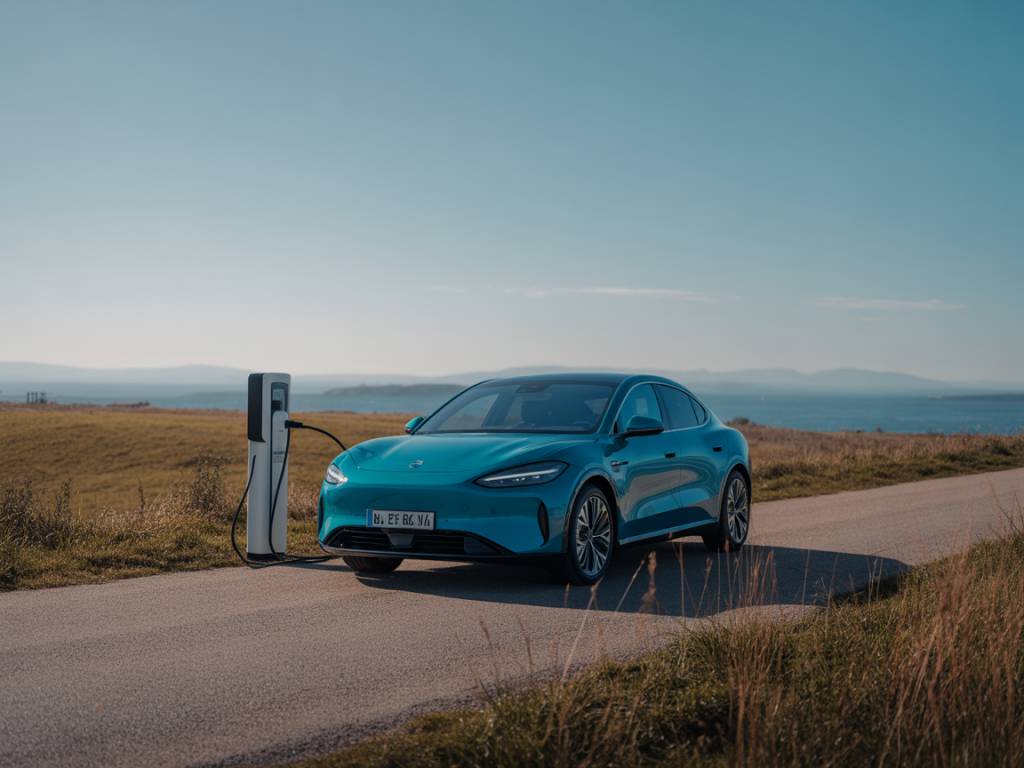
– Needs charging (home or public).
– No petrol or diesel backup.
– Very low running costs if you can charge cheaply. - Plug-in hybrid (PHEV):
– Combines a battery + electric motor with a petrol or diesel engine.
– You can plug it in (like an EV) but also fill up at a fuel station.
– Short trips can be electric; long trips use the engine or a mix of both.
On paper, a PHEV looks like the best of both worlds. In real life, it depends heavily on how disciplined you are about charging and whether your driving is mostly city or mostly country.
Urban lifestyle: when a fully electric car makes the most sense
If most of your life happens inside a ring road, an EV is often the most logical, cheapest and least stressful solution. Here’s why.
Urban driving patterns: lots of short trips
Typical urban use looks like this:
- Daily commute of 5–30 miles round trip
- School runs, shopping, gym – all within 5–10 miles
- Occasional weekend trips slightly further out
Most modern EVs with real-world ranges of 180–250 miles will handle a full week of this without touching a public charger, if you can plug in at home or work.
Charging in the city: the real deal-breaker
Ask yourself one blunt question: Can I reliably charge at home or at work at least 3 times a week?
- Yes, I have a driveway or dedicated parking and can install a charger
An EV almost always wins here. A typical home wallbox (7 kW) will add around 25–30 miles of range per hour. Plug in overnight and you’ll wake up with a “full tank” every day for a fraction of the cost of fuel. - No, I park on-street with no guaranteed charger
You’re now dependent on public chargers. If your city has a good network and you’re happy to plug in once or twice a week while shopping or at the gym, an EV can still work. If chargers are scarce or unreliable, a PHEV starts to look safer.
Real running costs in urban use
Let’s take a typical compact EV vs a similar-sized plug-in hybrid used mainly in town, UK-style costs as a guide.
- Energy costs (approximate, mid-2020s prices):
– Home charging off-peak: 8–15p per kWh → roughly 2–4p per mile in a small EV.
– Public rapid charging: 55–75p per kWh → 15–22p per mile.
– Petrol in a PHEV in town (stop-start, short trips): often 35–45 mpg → around 20–25p per mile at UK fuel prices. - If you actually plug in the PHEV:
– On electric mode it can match or slightly beat EV costs per mile.
– But many PHEVs have small batteries (25–50 miles real), so you’re back on petrol very quickly if you don’t recharge daily.
In short urban trips, a well-used EV is usually the cheapest thing you can drive per mile outside of a bicycle or bus pass.
Maintenance and reliability around town
Urban use is hard on combustion engines: lots of cold starts, idling, and never quite warming up properly. That means:
- EV: no oil changes, no exhaust, no clutch, fewer moving parts. Brakes last longer thanks to regenerative braking. City driving is what they like best.
- PHEV: doubles up on complexity – you have a full engine and an electric system. Short urban trips on petrol can cause issues like clogged particulate filters (for diesels) and more frequent servicing needs.
If your urban mileage is high (taxis, delivery, heavy commuting), the reduced wear and tear on an EV can translate to very real savings over several years.
Driving experience in the city
EVs were practically made for urban traffic:
- Instant torque for darting into gaps
- Silent, smooth starts from traffic lights
- One-pedal driving in many models – lift off and the car slows itself, regenerating energy
- No gear changes, no hunting between electric and petrol modes
PHEVs can also be quiet in electric mode, but many will fire up the engine if you accelerate briskly, need heating on a cold day, or drain the small battery. Mixed-mode shuffling isn’t dangerous, just less relaxing than a straightforward EV.
When a plug-in hybrid still makes sense in the city
There are a few urban cases where a PHEV can be the better compromise:
- No home charging, weak public charging
You want cleaner city driving and the ability to access low-emission zones, but you don’t want to live on charging apps. You can run electric for short trips when you find a charger, but rely on petrol when you can’t. - Company car with big tax advantage for PHEVs
In some markets, PHEVs get very favourable company car tax if the official electric-only range is above a certain threshold. If your employer funds the car and you can charge at work, it can be financially attractive. - One car for city plus occasional long trips
If you do 90% city and 10% longer journeys but really hate planning charging stops, a PHEV is a safety net. Just remember: if you rarely plug it in, it’s just a heavy petrol car with a fancy badge.
Rural and long-distance lifestyles: where the answer gets trickier
If you live in a village, do regular cross-country drives, or spend a lot of weekends doing 150–300 mile runs, the choice between EV and PHEV isn’t as clear-cut.
Range and charging for rural drivers
Think about your usual longer trips:
- Weekly 150–250 mile round trip to the nearest city, family or clients
- Frequent motorways at 70 mph (where EV consumption increases noticeably)
- Limited local charging infrastructure, especially rapid chargers
Modern EVs with a real 220–280 mile motorway range can handle this, but your margin for error depends on charging access at your destination.
- If you can plug in at home and at the other end (family driveway, hotel with chargers, workplace), an EV remains fully viable – you just need one rapid stop now and then.
- If you cannot reliably charge at your destination and your round trip exceeds your usable range, you must plan at least one charging stop on the way.
For many rural drivers, that extra planning is fine. For others – especially those with tight schedules or poor local charging – it feels like too much risk.
PHEVs for rural use: the good news and the catch
On paper, a PHEV solves the rural problem neatly:
- Short local runs on electric
- Instant petrol backup for 300–500 mile days
- No need to worry about charger availability on a late-night drive
The catch is efficiency. Once the small battery is flat, a PHEV often becomes less efficient than a comparable non-hybrid petrol because it’s hauling a heavy battery and motor everywhere.
If you’re doing, say, 70–80% of your rural driving on long runs where the battery empties quickly and spends hours empty, your fuel economy will look disappointing compared to the brochure figures.
Cost comparison on long runs
Let’s imagine a regular 250-mile trip, mostly motorway:
- EV with 75 kWh battery and real motorway consumption of 3.0 mi/kWh:
– Energy needed: about 84 kWh (allowing for winter or headwinds).
– Start at 100%, arrive near empty, or do one fast charge midway.
– If home charging both ends at 15p/kWh: around £12.60 for the full trip.
– If half the energy is from rapid charging at 70p/kWh, half from home: roughly £29 total. - PHEV averaging 45 mpg once the battery is used:
– 250 miles at 45 mpg ≈ 5.5 gallons, about 25 litres.
– At, say, £1.55 per litre, roughly £39 in fuel.
– A bit less if you start with a full battery and do the first 30–40 miles electric.
So even with some rapid charging, the EV can be cheaper per trip. But cost isn’t the only factor; convenience, charging availability and your tolerance for planning all matter.
Countryside charging reality check
Before committing to an EV in a rural setting, check:
- How many rapid chargers are within a 20–30 mile radius?
- Are they mostly tied to one network or spread across several apps and tariffs?
- Do you regularly drive at times when chargers are busy (Friday evenings, holiday periods)?
- Can you install a reliable home charger with off-peak rates?
If home charging is easy and you only occasionally need public chargers, rural life with an EV is straightforward. If you have no off-street parking and the nearest high-speed charger is 40 miles away, a PHEV may simply be the saner choice for now.
Battery size, winters and hills
Rural driving often means:
- Higher average speeds (faster A-roads, motorways)
- More elevation changes (hills, passes)
- Colder, windier conditions
All of these eat into EV range. In winter with heating on, expect 20–40% less range than the brochure figure, especially at 70 mph. My own test loops on UK A-roads and motorways regularly show that a claimed 300-mile EV is more realistically 200–230 miles in poor weather.
So if you’re rural and anxious about range, look for an EV with:
- A buffer beyond your longest regular one-way trip (ideally 1.5x the distance)
- Heat pump and pre-conditioning (warming the cabin while plugged in)
- Good real-world consumption figures, not just a big battery
Environmental impact: what actually changes
Both EVs and PHEVs reduce local emissions compared to pure petrol or diesel, but in different ways:
- EV in the city:
– Zero tailpipe emissions where people breathe the most.
– Big win for air quality if widely adopted. - PHEV in the city:
– Very good if driven mostly in electric mode.
– Barely better than a normal petrol if rarely charged. - EV in rural/long-distance:
– Emissions depend on how your electricity is generated.
– Still usually significantly lower than burning fuel, especially over the full life of the vehicle. - PHEV on long trips:
– Marginal gains vs a modern efficient petrol unless you top up the battery at each stop.
The uncomfortable truth with PHEVs is that their environmental benefit is 100% dependent on driver behaviour. Used well, they’re good; used badly, they’re heavy petrol cars.
Ownership, resale and long-term value
A car is a 5–10 year decision for most buyers, not a 12-month experiment. How do EVs and PHEVs look over time?
- Battery longevity:
Modern EV batteries degrade slowly if properly managed; most retain 70–80% capacity after 8–10 years. For urban driving, even 70% of an original 250-mile range is still very usable. - PHEV complexity:
You’ve got everything: engine, gearbox (usually), catalytic converter, exhaust, plus the electric side. More to service, more to potentially fail out of warranty. - Regulation and resale:
More cities are tightening rules on combustion engines. EVs will always pass; PHEVs may face stricter treatment if they’re seen as under-used hybrids. Long term, pure electric may hold value better in urban-focused markets. In very rural areas, that might be reversed, at least in the medium term, depending on how quickly charging improves.
So which should you pick for your lifestyle?
If your life is mainly urban and you can charge at home or work:
- An EV is almost always the smarter, cheaper, calmer choice.
- You’ll benefit most from low running costs, simple maintenance and silent driving.
- Look at real-world range around 180–250 miles; more is nice but not essential.
If you’re urban but have no reliable home or workplace charging:
- Check your local public charging reality, not just the map.
- If on-street chargers are frequent and usually available, an EV can still work.
- If charging feels like a weekly battle, a PHEV offers flexibility with some electric use.
If your life is mostly rural or you often do long motorway trips:
- If you can charge at home and occasionally at your destination, a longer-range EV can still be a great fit, with lower long-term costs.
- If you can’t charge reliably and your trips often exceed realistic EV range with no guarantee of rapid chargers, a PHEV is a pragmatic halfway house.
How to make the final call in 10 minutes
Grab a notepad or an app and write down:
- Your typical weekday mileage and where you actually drive.
- Your 5 longest regular trips per year with distances.
- Where you park overnight and whether you could realistically install or access a charger.
- How often you’re willing to plug in per week (be honest, not optimistic).
Then pressure-test each option:
- EV:
– Does its real-world range (not brochure) comfortably cover 90% of your life?
– Are the remaining 10% manageable with a bit of planning and a reliable charging network? - PHEV:
– Will you genuinely plug it in most nights or at least several times a week?
– Or are you just buying weight and complexity you’ll rarely use?
If you end up with a clear “yes” for an EV, don’t be put off by range anxiety stories that don’t match your actual usage. If your answers are full of “it depends” and “maybe, if the chargers aren’t busy”, a PHEV (or even a modern non-plug-in hybrid) may be the calmer choice for now.
The last question to ask yourself is simple: Which option will genuinely reduce your stress day to day? For many urban drivers with home charging, that’s now an EV. For some rural and high-mileage users in areas with patchy infrastructure, a PHEV remains a useful stepping stone until the charging map catches up with their postcode.