
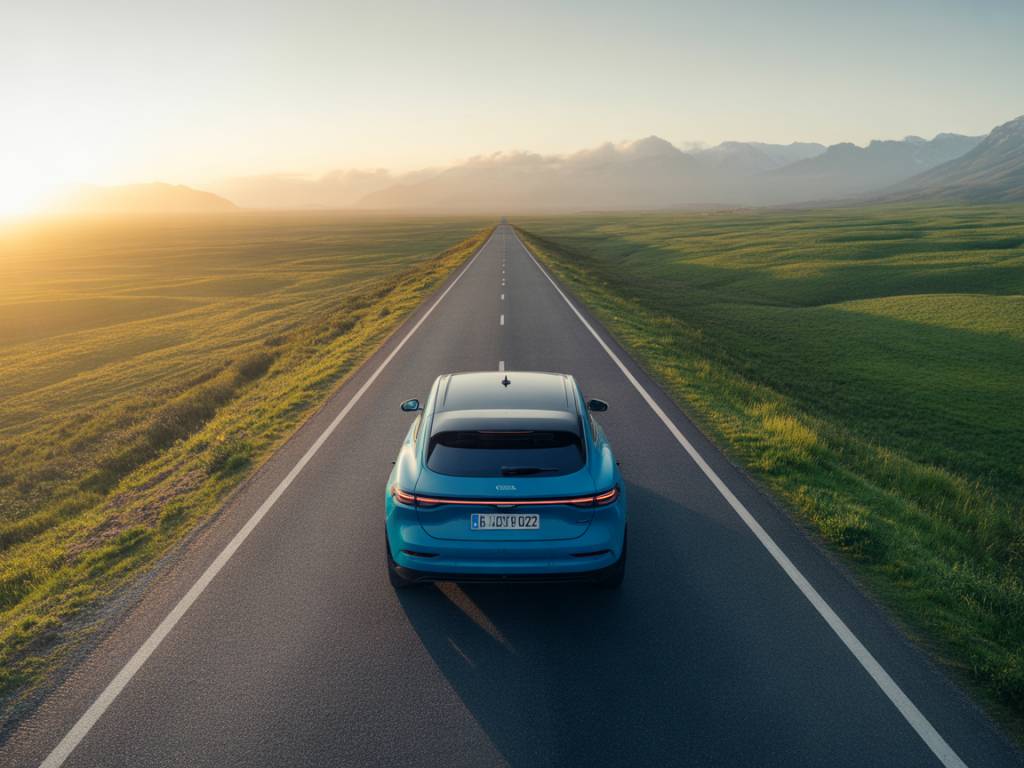
Why long trips in an EV feel stressful (and why they don’t have to)
Most drivers who are new to electric cars don’t fear the motorway, they fear the unknown. How far will I really get at 70 mph? What if a charger is broken? Will I spend my holiday queuing on a service area car park?
After a decade of testing EVs across the UK and Europe, the pattern is clear: long journeys in an electric car are only stressful when you improvise like you would in a petrol car. With a bit of planning, they become calmer, cheaper and often more pleasant than diesel road trips.
Let’s walk through a practical, step-by-step way to plan long-distance electric journeys that keep range anxiety – and arguments – firmly in the rear-view mirror.
Step one: know your real-world range, not the brochure fantasy
The single biggest stress reducer is knowing, realistically, how far your car will go on the kind of trip you’re planning.
Forget the WLTP figure for a moment. What matters is:
- Speed (70–75 mph kills range much faster than 60 mph)
- Temperature (cold batteries mean higher consumption)
- Load (four people, holiday luggage, a roof box… it all adds up)
- Terrain (long climbs on the M6 or in Wales versus flat motorways)
If you haven’t done a longer run in your EV yet, simulate it:
- Go for a 30–50 mile motorway drive at your normal cruising speed.
- Reset the trip computer and check your average consumption (kWh/100 km or mi/kWh).
- Multiply that by your usable battery capacity (not the gross figure on the brochure).
Example: Your car uses 20 kWh/100 km on the motorway and has a 60 kWh usable battery.
- 60 / 20 = about 300 km, or roughly 185 miles of motorway range.
- Now apply a safety buffer of 20–25%. Realistic, stress-free range: ~140–150 miles.
This “stress-free range” is the number that really matters. It’s what you’ll plan around.
Build your route around your charging sweet spot, not 0–100%
Many new EV drivers try to mimic petrol habits: run as low as possible, then fill to 100%. Electrically, that’s the worst strategy for both time and stress.
Fast chargers work best when the battery is between roughly 10% and 60–70%. Above that, charging often slows dramatically. Below that, you’re no longer relaxed; you’re counting miles.
For long trips, you usually want to:
- Arrive at rapid chargers between 10–25% state of charge (SoC).
- Leave when you reach 60–80%, depending on charger availability ahead.
- Aim for 20–40 minute stops rather than huge, once-per-day charges.
Why? Because these stops naturally align with what you should be doing anyway on a long drive: stretching, using the toilet, grabbing a coffee, swapping drivers. Instead of “waiting for the car”, you’re simply letting the car charge while you do what you’d do on a sensible petrol break.
Use the right tools to plan – and double-check them
Navigation in modern EVs has improved, but I still don’t trust any single app blindly. Think of route planning as a cross-checking exercise:
- Use an EV-specific planner – tools like A Better Routeplanner (ABRP), Zap-Map, or the car’s built-in planner if it’s decent. Enter:
- Your actual consumption (from your test drive)
- Your preferred cruising speed
- Temperature, if the app allows it
- Your desired arrival SoC (e.g. don’t arrive below 10–15%)
- Cross-check charger reliability – on apps that show:
- Recent check-ins and comments from users
- Number of chargers on site (a single 50 kW is a risk; eight 150 kW units is safer)
- Operator uptime reputation (some networks are simply more reliable than others)
- Check payment options – contactless bank card is simplest. If an operator needs an app or RFID card, install/register before you leave your driveway, not at 2 a.m. with poor signal.
Build your route with these criteria in mind:
- Stops every 100–150 miles (or according to your stress-free range)
- Prefer service areas or hubs with multiple rapid chargers
- Add at least one backup charger within 10–20 miles of every planned stop
Factor in weather and driving style before you hit the road
If your big trip is in July, range is usually better than in January. If it’s winter, be conservative.
Here’s how I adjust expectations:
- Summer (15–25°C): motorway efficiency is often close to your “test drive” figure.
- Winter (0–10°C): I often add 15–25% to motorway consumption, especially if you use a lot of heating and do short stop–start sections.
Driving style makes a visible difference in an EV. Some practical adjustments for long trips:
- Set cruise to the realistic pace of traffic, not “as fast as allowed”. 65–70 mph instead of 75–80 mph often adds 20–40 miles of range.
- Use Eco mode if it doesn’t make the car painfully sluggish; it often softens throttle and reduces HVAC power.
- Preheat or precool the car while still plugged in, especially in winter – that first 10–15 minutes of cabin heating is energy-hungry.
These aren’t about “hypermiling” for YouTube; they’re about adding a comfortable margin so you’re not nervously watching the percentage tick down.
Plan your charging stops like you’d plan your breaks
Once you know your realistic range and have mapped chargers, turn those into natural rest stops instead of necessary evils.
Think in terms of segments:
- Early morning departure:
- Leave with 90–100% from home or an overnight charger.
- First stop after 120–160 miles, arriving at 20–30%.
- Midday and afternoon:
- Shorter segments of 100–130 miles, matching meal or coffee breaks.
- Charge 20–40 minutes per stop, back to 60–80% each time.
When choosing specific charger locations, look beyond the kW rating:
- Is there decent food or just a vending machine?
- Are there toilets, indoor seating, a play area for kids?
- Is the car park well-lit if you’ll arrive after dark?
It’s easier to relax when you’re charging next to a proper services building than next to a lonely unit behind a closed supermarket.
Always have a Plan B (and sometimes a Plan C)
Range anxiety isn’t actually about the car’s range – it’s about fear of being stuck if something goes wrong. The antidote is redundancy.
For each planned charging stop, identify:
- Primary charger: your ideal stop (multiple rapid units, food, toilets).
- Backup charger: another site on the same route, reachable with at least 10% SoC if the primary is down or full.
- Emergency option: a slower charger (AC) or another network slightly off-route that you could reach if things go really pear-shaped.
You don’t need to visit these backups; you just need to know they exist and roughly where they are. That alone takes away a huge amount of mental load.
Also, don’t be afraid to “charge a bit early” if you see a good opportunity. If a site with eight free rapid chargers appears when you’re at 45% and your next planned stop is at 15%, it can be smart to top up now rather than gamble on the unknown.
What to check and set up on the car before departure
Five minutes on your driveway can save you a lot of frustration later:
- Tyre pressures: Underinflated tyres hurt range and safety. Set to the recommended motorway load pressures (often on the door jamb).
- Charging settings: Make sure DC charging speed isn’t limited in the menus. Some cars have user-set caps.
- Navigation + battery preconditioning: If your car can precondition the battery for fast charging when you set a charger as the destination, use it – especially in winter.
- Charging cables & adapters: Even if you plan only DC rapid charging, bring:
- Your Type 2 cable (for AC posts at hotels, public car parks).
- Any specific adapters your car needs (for example, for tethered-only AC charge points).
- Apps & RFID cards: Log in to the main charging apps and add payment cards. Some operators still use RFID cards – keep them handy, not buried in the boot.
Pack for comfort, not survival mode
You don’t need an apocalypse kit, but a few simple items can turn an unexpected 40-minute top-up into a non-event rather than a misery.
- For everyone:
- Water and some non-melty snacks (nuts, cereal bars).
- Warm layers in winter – EVs heat well, but you might step outside or sit with cabin temp lower to maximise range.
- Charging cable bag organised so you’re not wrestling a knot of leads in the rain.
- With kids:
- Books, colouring, or offline downloads on tablets.
- A ball or frisbee in summer – great for burning energy next to a services field.
- Wet wipes and a change of clothes for smaller ones; charging stops often turn into snack catastrophes.
The more you treat charging stops as planned mini-breaks, the less anyone cares how long they last.
Timing and traffic: when to leave, when to slow down
EV or not, nothing adds stress like crawling through traffic watching your range projection bounce around.
A few timing tricks that help specifically with electric road trips:
- Leave early or late to avoid heavy congestion around major cities and junctions. Stop for a long breakfast or dinner while the peak passes.
- Expect lower consumption in queues than at motorway speed. Don’t panic if the predicted arrival SoC drops when you’re at 70 mph – it often climbs back up when traffic slows.
- Use the live traffic layer in your navigation and check how diversions affect charging stops before blindly accepting them.
Sometimes, deliberately reducing speed on a clear motorway is the smartest option. Dropping from 75 mph to 65 mph can:
- Save you one charging stop over a long day’s drive, or
- Turn a marginal 8–10% arrival into a comfortable 15–20%.
That often saves time overall, even if the drive itself is 10–15 minutes longer.
What if something goes wrong anyway?
Even with the best planning, you may encounter:
- All chargers in use
- A unit out of service
- A charger delivering a much lower power than advertised
Here’s a basic playbook to stay calm:
- Check all units on site: Sometimes one is broken but others are fine.
- Look for signs and QR codes: They often include a helpline number. Call it – operators can sometimes restart a unit remotely.
- Open your backup plan: Use apps to check your pre-identified fallback site. If it’s within range with a comfortable margin, head there.
- If queues are long:
- Ask other drivers how long they’ve got left – many are nearly done.
- Decide if a slower, less busy charger nearby would work better for you.
Remember, arriving at your backup charger with 8–10% isn’t a failure; it’s exactly what you planned for. The goal isn’t to stick stubbornly to Plan A, it’s to reach your destination without drama.
Charging at your destination: the real secret to a relaxed return trip
Many drivers focus only on getting to the holiday cottage or hotel. The quiet stress comes when they realise there’s no convenient place to recharge for the way back.
When booking accommodation, treat charging like Wi-Fi:
- Check if there’s on-site charging (and whether it’s usable overnight or shared).
- If not, look for:
- Nearby public AC points where you can leave the car for a few hours.
- Supermarkets with EV bays you can use when doing a food shop.
- Rapid chargers on the edge of town for a quick top-up before you leave.
An overnight AC charge at 7 kW adds roughly 30–35 kWh – easily 100+ miles of range for many EVs. That single factor can turn the entire return leg into a much more relaxed drive with fewer rapid stops.
How this compares to a long petrol or diesel trip
It’s worth being honest: if you’re used to driving 400–500 miles on a tank and only stopping once “when you absolutely must”, an EV will force you into a different rhythm.
The key differences on a well-planned EV trip are:
- More frequent, shorter breaks: Usually better for your body and concentration.
- Lower fuel cost per mile: Even at rapid rates, especially if some charging is done at cheaper home or destination rates.
- More mental planning upfront: You do the thinking at home once, rather than improvising on the road.
For many drivers I’ve coached through their first long EV journey, the surprise isn’t that it’s possible; it’s that, with a bit of prep, it actually feels more civilised. The trip becomes a series of planned pauses rather than an endurance test.
Putting it all together for your next trip
If you want a simple checklist to apply all of this, use this framework a week before you travel:
- Measure your real motorway consumption and calculate a realistic, stress-free range.
- Plan your route in an EV-specific app with your own numbers, not default guesses.
- Choose charging stops that double as proper rest breaks, with food and facilities.
- Add at least one backup charger for each planned stop.
- Install and test key charging apps, and check payment methods.
- Check your car’s settings: tyre pressures, charging limits, battery preconditioning.
- Pack small comfort items so charging time feels useful, not wasted.
- Be ready to drive a little slower or stop a little earlier if conditions change.
Do that once, properly, and each long EV journey after that becomes easier. The car stops being a source of anxiety and becomes what it should be: a quiet, efficient way to get you and your passengers where you want to go, without the background worry of what’s happening at the fuel gauge.