
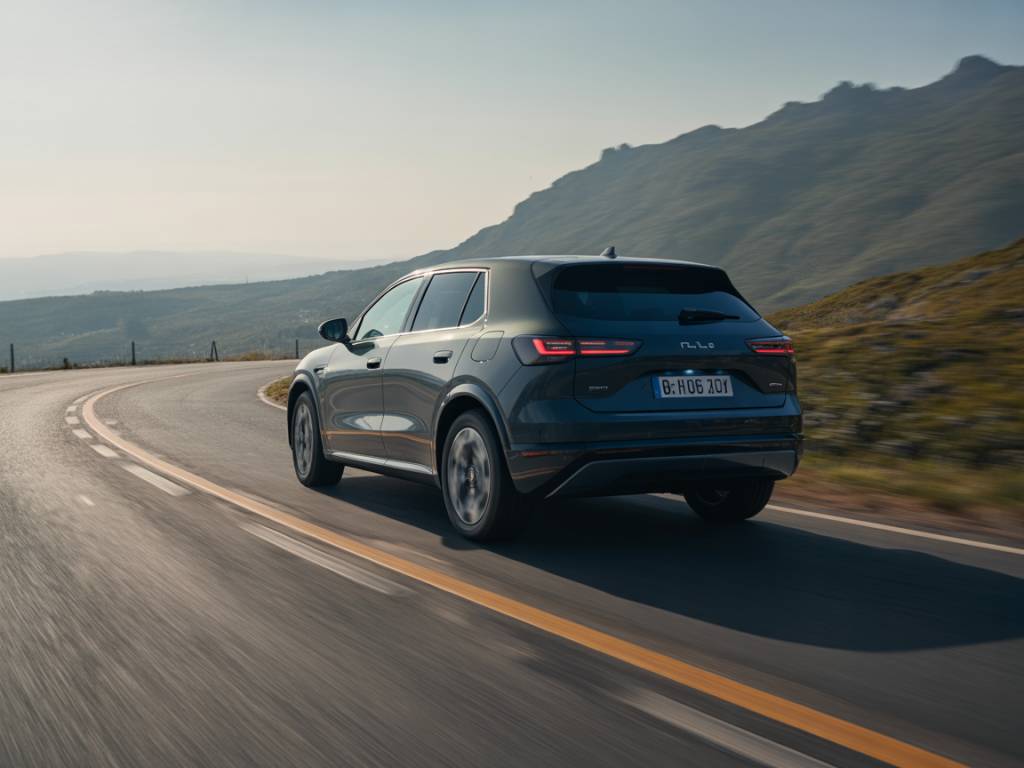
If you strip away the advertising slogans, choosing between petrol, hybrid and electric comes down to something assez simple: how you drive, where you drive, and how long you plan to keep the car.
Not what you wish your life looked like. Your real, messy, Monday-morning-with-rain-and-traffic life.
In this guide, we’ll look at each drivetrain with a cold, budget-focused eye. We’ll talk about what they really cost to run, how they behave day to day, and in which situations they shine or fall apart financially.
Start with your real usage, not the brochure
Before looking at engines and batteries, be brutally honest about how you use a car today.
Ask yourself:
- How many miles a year do you actually drive? (Check MOT history or service invoices, not just your memory.)
- What’s your typical daily distance? 10 miles? 60 miles? 150 miles?
- How often do you do long trips over 150–200 miles in one go?
- Do you have off‑street parking where a home charger could be installed?
- How long do you usually keep a car? 3 years? 7 years? 10 years?
Those answers matter more than whether you “like the idea” of electric or you’re “used to” petrol. Each drivetrain wins in a different usage pattern, especially when you look at long-term costs.
Petrol: still king of flexibility, but not of running costs
For now, a conventional petrol car remains the default choice for many drivers. It’s simple, familiar, and the upfront price is usually lower than an equivalent hybrid or electric.
Where petrol makes sense:
- Low annual mileage (under ~6,000 miles/year): the extra purchase price of a hybrid or EV may never pay back.
- No home or workplace charging, and no realistic way to install it.
- Irregular use: the car sits for long periods and is mostly used for occasional longer trips.
- Budget used car purchase where EVs and hybrids in your price range are old or high-mileage and you want something simple to maintain.
Running costs (UK ballpark figures):
- Fuel: at around £1.50/litre, a typical petrol car doing 40 mpg costs roughly 16–18p per mile in fuel.
- Maintenance: oil changes, filters, spark plugs, exhaust, clutch & gearbox… more moving parts than an EV, so more potential wear items.
- Depreciation: generally predictable, big used market, but some petrol models may lose favour in cities tightening emissions rules.
Weak points:
- Fuel is the most expensive per-mile energy on the table.
- Stop‑start city driving kills efficiency and can clog expensive components (like particulate filters on modern engines).
- Future restrictions on older petrol models in city centres may hurt resale if you live or work in a low-emission zone.
In short: if your annual mileage is low, or your budget is tight and you can’t charge at home, petrol is still a rational choice. Just don’t pretend it’s cheap per mile.
Full hybrid (HEV): great in town, less magic on the motorway
By full hybrid, we mean cars like the Toyota Yaris Hybrid or Hyundai Ioniq Hybrid: you never plug them in, they self-charge through braking and the engine.
Where full hybrids work very well:
- Urban and suburban driving with lots of stop‑start traffic.
- Taxi, ride‑share, delivery usage: they handle abuse and idling better than many pure petrols.
- Drivers who can’t plug in but want lower fuel bills and emissions.
What they really do:
- Recover energy when braking, reuse it for low-speed driving.
- Run the engine at more efficient rpm ranges more of the time.
- In town, you’ll often see fuel consumption around 55–65 mpg from a well-driven hybrid.
Running cost reality:
- Fuel in mixed use can drop to around 10–12p per mile, sometimes less in city driving.
- Maintenance is often comparable to petrol: there’s still an engine, oil changes, etc., but brake wear can be lower thanks to regeneration.
- Hybrid batteries on modern models are generally robust; many brands offer extended warranties when serviced on schedule.
Limits you should know:
- They’re not electric cars. Pure electric driving is brief and low-speed.
- On the motorway, the advantage over a good small petrol engine shrinks; you may see mid‑40s to low‑50s mpg rather than huge savings.
- Purchase price is higher than equivalent petrol, so you need the fuel saving to compensate over your ownership period.
If your driving is 70% city and 30% motorway, a full hybrid can be the sweet spot if you cannot or do not want to plug in.
Plug‑in hybrid (PHEV): brilliant on paper, hit‑and‑miss in real life
Plug‑in hybrids combine a normal engine with a larger battery you can charge from the mains. Official fuel figures look fantastic… but only if you use them as designed.
Where PHEVs can be excellent:
- You can plug in at home or at work reliably.
- Your daily commute is shorter than the electric range (20–50 miles for most PHEVs).
- You often do short trips but want petrol backup for occasional long journeys.
- You benefit from company car tax breaks or low-emission zone advantages.
If you charge every night and most of your trips are under the electric range, your fuel consumption can be tiny. You might use petrol only on weekends or holidays.
Where PHEVs go wrong:
- You don’t bother to charge most of the time.
- Lots of motorway driving where the car hauls a heavy, half-empty battery around.
- Fleet or lease cars where drivers ignore charging because fuel is on a company card.
In that “wrong” usage, fuel consumption can be worse than a simple petrol or diesel, because you’re carrying dead weight and the combustion engine isn’t especially optimised.
Costs to factor in:
- Purchase price is usually higher than both petrol and full hybrid.
- Two drivetrains to maintain: engine & gearbox + electric motor & battery.
- Servicing can be more complex, although intervals are often similar to petrol/hybrid.
My rule of thumb: if you’re not ready to plug in at least four to five times per week, skip the PHEV. Take a good full hybrid or go fully electric.
Pure electric (EV): cheap to run, not free to live with
Electric vehicles have a simple sales pitch: no tailpipe emissions, fewer moving parts, much lower energy costs per mile. All true – if you use them in the right way.
Where EVs are at their best:
- Daily mileage up to 100–150 miles with the ability to charge at home overnight.
- Regular commuting where you can predict your usage.
- Urban & suburban driving with access to off‑street parking.
- High annual mileage drivers who can charge cheaply, e.g. 12,000+ miles/year.
Energy costs per mile:
- Home charging at ~30p/kWh (tariffs vary) and a car using ~3–4 miles per kWh means around 7–10p per mile.
- Off‑peak or EV tariffs can drop that further.
- Public rapid chargers, however, can cost 50–80p/kWh, pushing you towards 15–22p per mile – sometimes more than petrol.
Maintenance and reliability:
- No oil, no clutch, no exhaust, far fewer wear items.
- Brake wear is lower thanks to regenerative braking.
- Most modern EV batteries show limited degradation in the first 5–8 years if treated properly.
Practical downsides:
- Purchase price often higher than petrol/hybrid, though total cost can be lower over time with cheap charging.
- Long trips need more planning: you’ll live with apps and charging networks.
- No home charger? Living on public chargers only can be expensive and frustrating.
- Cold weather reduces range noticeably, especially on smaller‑battery models.
With an EV, the equation is simple: if you can charge at home and your typical daily range is within the car’s comfort zone, running costs are hard to beat. If you can’t, think very carefully.
Long-term budget: total cost, not just fuel
To compare drivetrains fairly, you need to look at the full ownership picture over the years you’ll keep the car.
Key components of total cost:
- Purchase price (or monthly payment): what gets you into the car.
- Energy costs: fuel or electricity per mile, based on your real driving.
- Maintenance & repairs: servicing, wear parts, unexpected failures.
- Insurance & tax: varies by model and region, but lower emissions can help.
- Depreciation: how much value you lose when you sell or trade in.
Typical patterns we see in real ownership:
- Petrol: cheaper to buy, more expensive to fuel, average maintenance costs, predictable depreciation.
- Full hybrid: slightly more expensive to buy, cheaper fuel in town, maintenance similar to petrol, good resale on trusted brands.
- PHEV: highest purchase price, potentially low fuel costs if charged often, more complex tech, depreciation depends heavily on reputation and incentives.
- EV: higher purchase price, very low running costs if home charging, low routine maintenance, but depreciation still influenced by tech “fashion” and battery perceptions.
If you keep cars a long time (7–10 years), the EV’s low running and maintenance costs can outweigh the purchase price, especially if you do decent mileage and charge at home. If you change cars every 3 years and do low miles, the fuel savings may barely dent the monthly payment difference.
Home charging vs public charging: the EV deal-breaker
For EVs and PHEVs, one question dominates: can you reliably plug in where you park?
With home charging:
- You treat the car like your smartphone: plug in overnight, wake up with “full tank”.
- You pay the cheapest tariffs, sometimes using off‑peak rates.
- Day-to-day, you almost never visit public chargers except on long trips.
Without home charging:
- You rely on public chargers, competing with other users and dealing with broken or occupied units.
- Your cost per mile can be as high as – or higher than – petrol.
- You waste time detouring to charge, especially if chargers near you are busy.
If you live in a flat with only on‑street parking, check very carefully what your local charging infrastructure is like today, not what’s promised for 2028. In some city centres, public networks are dense enough to make EV life workable; in others, it’s daily frustration.
Long trips and holidays: does range anxiety matter to you?
How often you do long journeys matters less than how tolerant you are of planning.
- Petrol: refuel anywhere in minutes, no planning required.
- Full hybrid: behaves like a normal petrol, just uses less fuel.
- PHEV: on long trips, it’s mostly a slightly heavier hybrid or petrol once the battery is empty.
- EV: you’ll need to plan charging stops and sometimes adapt your speed or route.
If you do a 300‑mile trip once a year, it may not be worth shaping your entire drivetrain choice around that one journey. Renting a different vehicle for holidays can be cheaper than fuelling a less efficient car 365 days a year.
Which drivetrain for which lifestyle?
Let’s match typical usage patterns to the most suitable drivetrain from a budget and practicality standpoint.
City dweller with off‑street parking, 6,000–10,000 miles/year
- Daily trips under 40 miles, occasional weekend trips.
- Best bet: small to mid-size EV if you can install home charging.
- Alternative: full hybrid if home charging is impossible or your building won’t allow it.
Suburban commuter, 30–60 miles/day mixed driving
- Home with driveway, fairly predictable routine, few very long trips.
- Best bet: EV with enough range to cover your round-trip comfortably.
- Alternative: PHEV if you want engine backup, but only if you’ll actually plug in most nights.
Rural driver, 10,000+ miles/year, frequent long journeys
- Limited public charging, lots of 100–200 mile trips.
- Best bet: full hybrid or efficient petrol if budget is tight.
- EV can still work if you can charge at home and are happy to plan rapid-charge stops on longer runs, but check charger coverage on your usual routes.
Low-mileage driver, under 5,000 miles/year
- Car sits for days, mostly short local trips.
- Best bet: a simple petrol or full hybrid if most trips are in traffic.
- An EV can work and will be pleasant to drive, but the fuel savings may never recoup the higher purchase price.
Company car / benefit‑in‑kind optimiser
- Tax advantages for low- and zero‑emission vehicles.
- Best bet: usually EV if you can charge at work or home.
- PHEV only makes sense if your real usage matches the electric range; otherwise you get the tax hit of a heavy car without the fuel savings.
So, what should you actually do next?
Instead of starting with “I want an EV” or “I don’t trust hybrids”, start with a piece of paper (or spreadsheet) and your last year of driving.
- Write down your annual mileage and typical daily distances.
- Mark how many journeys each month are over 150–200 miles.
- Check your real fuel spend: card statements don’t lie.
- Be honest about your home charging possibilities.
Then, test-drive at least one of each type that suits your budget: petrol, hybrid, and EV. Live with each for a day if possible. Notice not just the tech, but how they fit your routine: where you’d fuel or charge, how often, and at what cost.
The drivetrain that truly suits your lifestyle and long-term budget is rarely the one with the flashiest brochure. It’s the one that quietly does what you need, day in, day out, while taking the least money out of your account over the years you own it.