If you’re watching every pound that leaves your bank account, the promise of “EVs are cheaper to run” can feel a bit vague. Cheaper how? And for who? A company car driver doing 20,000 miles a year on cheap workplace charging does not live in the same world as a family doing 7,000 miles with no home charger and a tight mortgage.
Let’s put some real UK numbers on the table and look at the total running cost of an electric car versus a petrol car – not in marketing language, but in pounds per mile.
Purchase price and depreciation: where the big money is
For budget-conscious drivers, the biggest cost isn’t fuel or electricity. It’s the car itself – what you pay to get into it, and what you lose when you sell it.
New for new, EVs are still more expensive than petrol equivalents in the UK, even with discounts:
That’s a gap of roughly £7,000–£10,000 up front. No amount of saving £15 a week on fuel will hide that in the short term.
On the used market, though, it’s a different story. EV values dropped sharply in 2023–2024, which is bad news for first owners but an opportunity if you’re buying used:
In other words, used EVs can now be in the same price range as used petrols – sometimes cheaper, mile for mile, because they were expensive new and have already taken a big depreciation hit.
So, if you’re on a budget and buying used, the “EVs are too expensive” argument is no longer as clear-cut. The key is to choose carefully (battery health, charging history, and whether the battery is leased on older French models).
Electricity vs petrol: the real fuel cost per mile
Running cost is where EVs tend to win, but how much you actually save depends entirely on how and where you charge.
Let’s compare two typical cars in real UK usage:
Now let’s plug in some realistic 2024 UK prices:
Cost per mile – home charging on standard tariff
So you’re saving roughly 7.5p per mile with an EV if you charge at home at a normal rate.
Cost per mile – off-peak EV tariff
Now the saving jumps to around 12p per mile. Over 8,000 miles a year, that’s roughly £960 saved annually versus petrol – serious money on a tight budget.
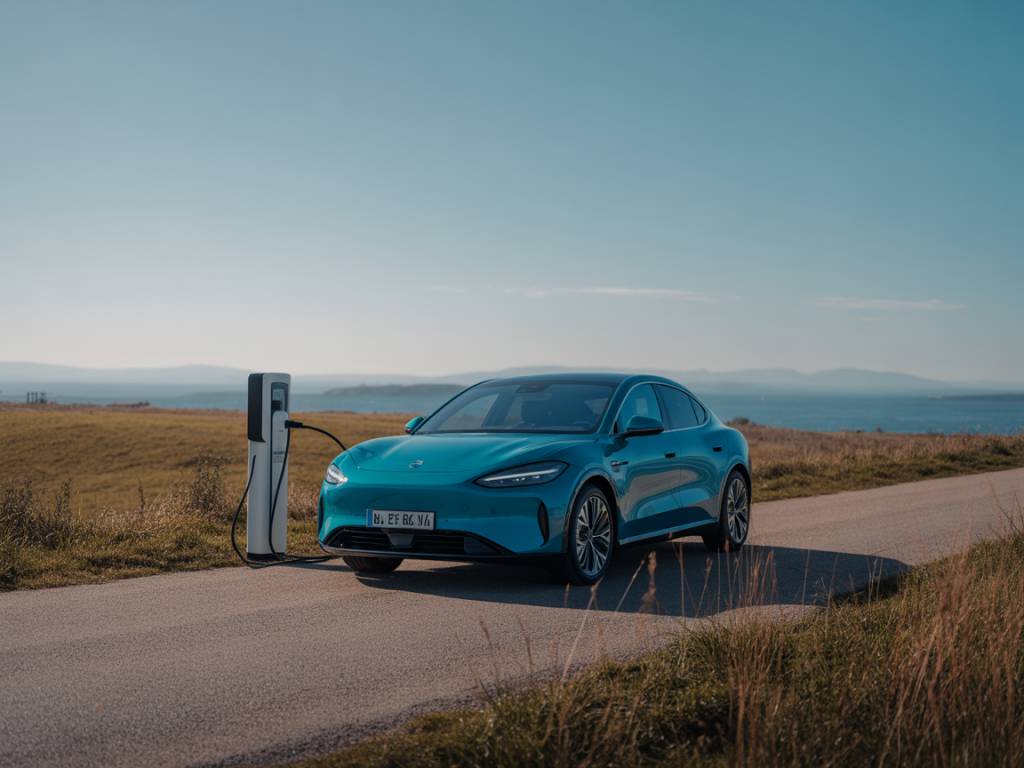
Cost per mile – relying mostly on public rapid charging
Here, the EV can actually be more expensive to “fuel” than a petrol, purely because public rapid charging is pricey.
So the brutal truth is this: if you have reliable driveway/garage charging and can access an off-peak tariff, an EV absolutely crushes petrol on fuel cost. If you’re in a flat with no home charging and you rely on rapid chargers, the maths can flip very quickly.
Servicing, maintenance and repairs: fewer fluids, different worries
The next big chunk of running cost is keeping the car in one piece.
Petrol cars need regular:
Electric cars don’t have:
They still need:
In practice, routine service costs for EVs are usually 20–40% lower than for petrol cars over several years, mainly because there are fewer moving parts and no engine oil changes.
On top of that, regenerative braking means brake pads and discs often last much longer on EVs – easily 50,000–80,000 miles depending on driving style. A comparable petrol car, especially used in town, may need front pads and discs significantly earlier.
The elephant in the room is battery replacement cost. For most budget-conscious buyers, that’s a scary prospect. A new battery pack can be anything from £5,000 to £15,000 depending on the model – a figure that makes no sense on a cheap used car.
Two important points here:
If you’re buying a used EV, check how much warranty is left on the battery, and use an OBD scanner or a garage specialising in EVs to assess battery health. Budget drivers should avoid cars with clearly degraded packs unless the price is low enough to treat it like a “short-term” car.
Insurance and tyres: the often-forgotten line items
Insurance is a mixed picture right now.
EV insurance premiums have gone up in the UK in recent years, partly because:
For common, modest EVs (Leaf, Zoe, MG4, Kona Electric), you may find premiums similar to or slightly higher than equivalent petrol cars for the same driver profile. For premium EVs (Tesla, Audi e-tron, I-Pace), premiums can be noticeably higher.
On tyres, EVs have two disadvantages:
Both of these eat tyres faster, especially the front ones. EV-specific tyres, which reduce noise and rolling resistance, can also be pricier.
However, if you drive smoothly and avoid “launch-control” starts at every traffic light, tyre life doesn’t have to be terrible. In everyday family use, tyres on an EV might cost you an extra £50–£100 per year compared with a similar petrol car, depending on mileage.
Tax, parking and clean air zones: the quiet savings
This is where low-emission vehicles quietly return money to your pocket, especially if you live near a city centre.
Vehicle Excise Duty (road tax)
If you’re driving a small, modern petrol car, your VED might already be quite low, but £150 a year is still £150 a year.
Congestion Charge and ULEZ (London) and other clean air zones
If your commute crosses one of these zones, an EV can save you £12.50 a day or more. Over a year, that dwarfs any difference in tyre costs.
Parking perks
These perks are shrinking as EVs become more common, but they still exist and can tilt the maths in your favour if you live or work in the right area.
Real-world scenarios: when an EV makes financial sense – and when it doesn’t
Let’s look at three typical UK drivers and see how the numbers stack up, in very broad strokes.
1. The commuter with a driveway (10,000 miles a year)
Profile:
Fuel/electricity cost:
Saving: roughly £1,200 per year on “fuel” alone.
Even if the EV costs £3,000 more to buy, you effectively “pay back” the difference in around 2.5 years through running costs, not counting cheaper servicing and road tax.
In this scenario, an EV is very hard to argue against financially, especially if you buy used and let the first owner take the depreciation hit.
2. The flat dweller, no home charger (6,000 miles a year)
Profile:
Fuel/electricity cost:
Here, the EV is actually more expensive per mile for energy, and you have the added hassle of hunting for chargers and waiting while it charges. Servicing will be cheaper, but not enough to fully cancel out the energy cost penalty.
In this scenario, unless you can:
the financial case for an EV is much weaker. You might still want one for environmental or driving-comfort reasons, but it’s not automatically the cheaper option.
3. The used-car, low-mileage driver (4,000 miles a year)
Profile:
At this mileage, fuel savings are relatively small:
Savings: about £300 per year versus petrol.
If an equivalent used EV still costs, say, £2,000–£3,000 more than the petrol car you’d otherwise buy, it will take many years to claw that back on fuel alone. Also, if you’re in this price band, you might be looking at older EVs with shorter range and possibly limited parts support.
Here, the smartest financial play is often a simple, reliable petrol car with good MPG and low insurance – unless you find a particularly good-value used EV with a healthy battery and affordable insurance quote.
Other day-to-day costs: time, convenience and hidden extras
For a budget-conscious driver, time and stress are part of the equation too. They don’t show up directly on a spreadsheet, but they matter.
Time spent refuelling or charging
If you’re already stretched, standing in the rain waiting for a busy charger isn’t just annoying – it’s a real cost in your week.
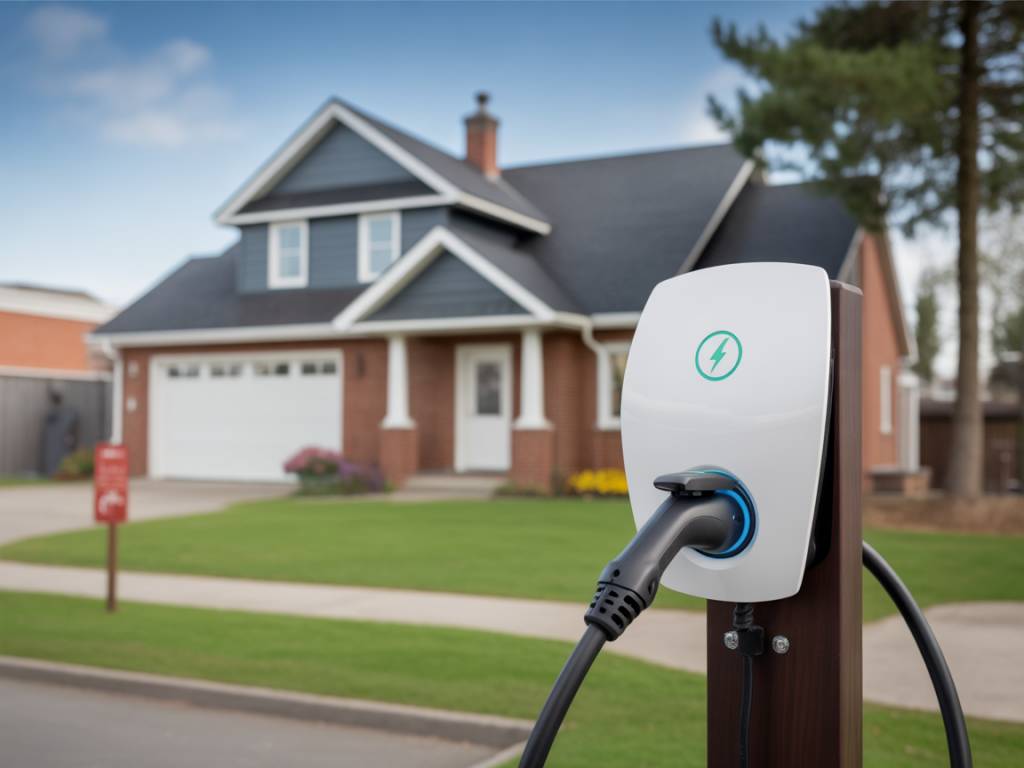
Home charging installation
Spread over, say, five years, that’s roughly £160–£220 a year. But it unlocks those cheap off-peak tariffs and the “refuel at home” convenience. If you own your home and plan to stay there, it’s usually worth it.
So, are electric cars really cheaper to run in the UK?
Boiled down, here’s where the numbers land for budget-conscious drivers:
The transition to electric isn’t just about technology; it’s about matching the tool to the job. For some UK drivers, especially those with driveways in suburbs and regular commutes, the EV is already the financially sensible choice. For others, particularly renters in cities without parking, the current charging ecosystem still makes petrol the lesser evil for the wallet.
Before you commit, grab your last 12 months of mileage, your energy tariff, and the pump price at your local station, and do the sums for your exact situation. Ignore the slogans. Let the pounds per mile – and the way you actually live – make the decision.