
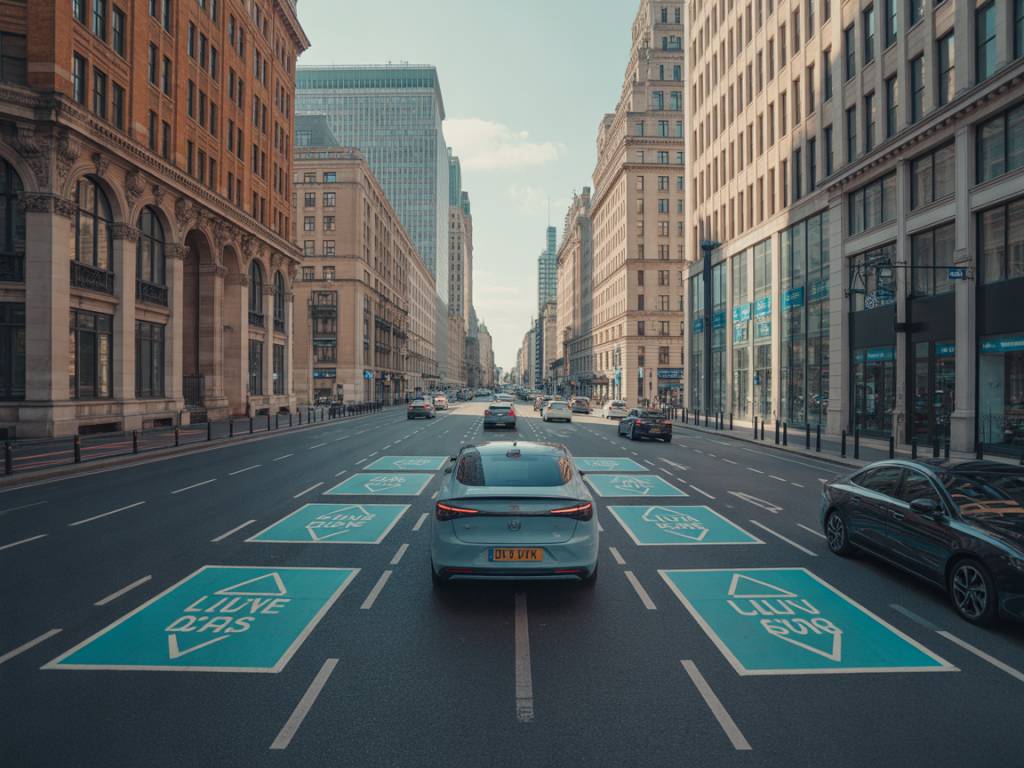
What are Ultra Low Emission Zones, really?
Ultra Low Emission Zones (ULEZ) are essentially pollution tolls. If your vehicle is considered dirty by current emissions standards, you pay a daily charge to drive into a defined area, usually a city centre or, in London’s case, most of the built-up area inside the M25.
The aim isn’t to punish drivers for fun. It’s to cut NOx and particulate emissions in places where people live, walk, and breathe. In practice, that means:
- Encouraging drivers to switch to cleaner vehicles (or other modes of transport).
- Reducing the number of older, more polluting diesels and petrols driving into busy areas every day.
- Improving air quality quickly, without waiting 10–15 years for the fleet to renew naturally.
The key point for you as a driver: ULEZ doesn’t ban your car. It just makes driving certain vehicles in certain areas expensive enough that you start to rethink your options.
Where are ULEZ and clean air zones in the UK now?
London is the best-known example, but it’s not the only one. Across the UK, we now have a patchwork of Ultra Low Emission Zones, Clean Air Zones (CAZ) and Low Emission Zones (LEZ). The names differ slightly, but the logic is the same: charge the dirtier vehicles more.
Here’s a quick tour of the main zones that affect private car drivers as of early 2026:
- London ULEZ: Covers almost all of Greater London. Non-compliant cars pay £12.50 per day, every day, 24/7 (excluding Christmas Day). This is on top of the weekday Congestion Charge if you go into central London.
- Birmingham Clean Air Zone: Covers the city centre ring road area. Non-compliant cars and vans pay £8 per day.
- Bristol Clean Air Zone: City centre and harbourside area. Non-compliant private cars pay £9 per day.
- Bath Clean Air Zone: Currently mainly targets buses, HGVs and taxis; private cars are exempt for now, but that can change.
- Portsmouth Clean Air Zone: Similar story to Bath – currently no charge for private cars, but commercial vehicles pay.
- Oxford Zero Emission Zone (ZEZ, pilot): A small central area where the cleanest vehicles pay the least (or nothing), and older, more polluting vehicles pay more. Expect this to expand over time.
Manchester, Sheffield, Newcastle and others have gone through several rounds of proposals and revisions. Some schemes have been watered down; others may tighten later. The pattern is clear, though: more cities will introduce restrictions of some kind, even if they’re not called ULEZ.
That’s why it’s worth understanding how the rules actually work before you change cars, or before you decide that your next city trip in that old diesel will “probably be fine”.
How do you know if your car is compliant?
ULEZ rules are based on Euro emissions standards, not age alone, and the criteria are broadly similar from one UK city to another:
- Petrol cars: Usually must meet Euro 4 (or better). In rough terms, that’s most petrol cars registered from 2006 onwards.
- Diesel cars: Usually must meet Euro 6. Roughly speaking, that’s diesels registered from September 2015 onwards.
- Electric cars: Always compliant. No tailpipe emissions, so no charge.
- Plug-in hybrids (PHEV) and non-plug-in hybrids: Treated as petrol or diesel depending on the engine under the bonnet. If it’s a Euro 4+ petrol or Euro 6 diesel, it’s usually compliant.
But “roughly speaking” isn’t how you want to make a £12.50-per-day decision. Use the official checkers instead:
- London ULEZ: Use the Transport for London checker – enter your number plate, get a clear yes/no and details of any charge.
- Other cities: Use the UK government’s Clean Air Zone vehicle checker. It covers Birmingham, Bristol and other CAZ cities.
Two practical tips from years of reader questions:
- Some early-2000s petrols do meet Euro 4 even if they’re a bit older than 2006. Always check the plate rather than assume.
- Some imported vehicles and campervans get misclassified. If the checker looks wrong, speak to the city’s support line or your DVLA record may need updating.
Five minutes online now can save you a nasty surprise in a multi-storey car park later.
What do ULEZ rules mean for petrol, diesel, hybrid and electric drivers?
ULEZ isn’t “anti-car” in general; it’s very specifically tough on certain types of car. The impact on you depends heavily on what you drive.
If you drive a modern petrol (Euro 4+):
- You’re usually safe. Most 1.0–2.0 litre petrol hatchbacks and crossovers registered from 2006 are compliant.
- Economically, ULEZ probably isn’t the reason to switch cars – your running costs and mileage will matter more.
If you drive an older petrol (pre-Euro 4):
- If you live inside or near a ULEZ, the daily charges will sting fast. Occasional visits might be tolerable; commuting in five days a week won’t be.
- These cars are also generally less fuel-efficient and have fewer safety features. ULEZ may be the push that makes an upgrade sensible.
If you drive a diesel (pre-Euro 6):
- You’re in the main firing line. Older diesels are targeted because they produce significantly more NOx and particulates in real-world use.
- A 2012 2.0 TDI that’s cheap to buy can become eye-wateringly expensive if you’re paying £8–£12.50 a day to park in Birmingham or London.
- If you mainly do motorway miles and rarely go near big cities, you might get away with keeping it for now – but its resale value in urban areas will keep sliding.
If you drive a Euro 6 diesel (2015 onwards):
- You should be compliant in most current schemes, but check using the plate anyway; some early Euro 6 models can be edge cases.
- You still benefit from diesel fuel efficiency on long trips, without being hammered by city charges.
If you drive a hybrid or plug-in hybrid:
- Almost all are compliant in ULEZ terms because their engines are relatively modern.
- From a clean air perspective, cities don’t care how often you plug in – only that the official Euro standard is high enough.
- From a driver’s perspective, charging them and using EV mode as much as possible still pays off in fuel savings.
If you drive a pure electric vehicle:
- You’re in the sweet spot: no ULEZ or CAZ charges in current schemes.
- Park, drive, loop around, head back in again – you won’t pay for emissions zones, though the Congestion Charge in London is a separate story.
- This is one of the reasons second-hand EV prices are holding better in or near big cities than in very rural areas.
In short: ULEZ is making life progressively harder and more expensive for older diesels and some older petrols, while barely touching modern petrols, hybrids and EVs.
The real-world cost: keep your car, pay the charge, or switch?
Let’s put some numbers to the decision, because that’s where things get clearer.
Imagine you have a non-compliant diesel and you drive into London’s ULEZ for work:
- Daily charge: £12.50
- 5 days a week, 46 working weeks a year: that’s 230 days
- 230 × £12.50 = £2,875 per year in ULEZ charges alone
That’s before fuel, parking, insurance and everything else. Over three years, you’re at around £8,600. Suddenly, upgrading to a compliant used car or a modest EV doesn’t look so unrealistic.
Now let’s look at someone in Birmingham:
- Daily CAZ charge for non-compliant cars: £8
- Say you drive in 3 days a week, 40 weeks a year: 120 days
- 120 × £8 = £960 per year
That’s less brutal, but over four or five years it still adds up. A £4,000–£5,000 difference in total cost of ownership between “keep the old diesel and pay” and “upgrade to a compliant used petrol” is entirely plausible.
On the other hand, if you go into a ULEZ city once every couple of months to visit family, paying the charge may be cheaper than changing cars prematurely. Twelve trips a year at £12.50 is £150 a year – not nothing, but not a reason on its own to spend £10,000 on a newer car.
The sensible approach is to be ruthless about your actual usage:
- How many days per year will you really be in a ULEZ or CAZ zone?
- What would that total in annual charges?
- How does that compare to the cost of upgrading – including depreciation, finance and insurance?
Run the numbers, not just the feelings about “being penalised”. The result is often clearer than you expect.
Choosing your next car with ULEZ in mind
If you’re in the market for a replacement car and you live anywhere near a major UK city, ULEZ needs to be in the decision mix, even if you don’t currently commute into the centre.
When I test and recommend cars for Terra-Car readers, I usually break it down like this:
For city-based drivers or regular city commuters:
- Pure EV makes a lot of sense if you can charge at home or reliably at work. You avoid ULEZ, your “fuel” bill drops dramatically, and stop-start traffic is where EVs are at their best.
- Small to mid-size petrol that meets Euro 4+ (realistically anything from 2010 onwards) is often the best budget option. No ULEZ charge, relatively low purchase price, and simple to maintain.
- Plug-in hybrids suit people who do mostly short city trips with occasional long journeys. Run them like a mini-EV in town, petrol backup for the motorway.
For rural or long-distance drivers who occasionally visit cities:
- Modern Euro 6 diesel can still be the best answer if you’re doing high motorway mileage. Just make sure it’s genuinely compliant so that the odd city trip doesn’t cost you.
- If you tow regularly or carry heavy loads, a compliant diesel still makes sense, but double-check ULEZ status before you buy, especially with older used SUVs and vans.
For budget buyers trying to stay ULEZ-compliant without breaking the bank:
- Look for smaller petrol cars from 2009–2013. Many are comfortably Euro 4 or even Euro 5, cheap to buy, and relatively simple mechanically.
- Be wary of “bargain” diesels from 2010–2014 that are not Euro 6. The purchase price may be low, but they’re effectively locked out of big cities during the week unless you pay.
- Ex-fleet hybrids can be good value, as long as there’s a clear service history and the high-voltage battery warranty situation is understood.
One final tip: when you’re browsing used cars, don’t just ask “what’s the MPG?” Also ask, “Is it ULEZ-compliant, and can you show me proof?” A compliant car will be easier to use and easier to resell over the next five to ten years.
Practical tips if you drive into ULEZ cities occasionally
Not everyone lives inside the M25 or the Birmingham ring road. If you’re an occasional visitor, you can soften the impact without changing your car tomorrow.
- Plan your parking: Many park-and-ride sites and some outer stations sit just outside the charging zones. Park there and finish the journey by train, tram, bus, bike or on foot.
- Batch your trips: If you’re paying for a day anyway, stack your errands and visits into one trip instead of three smaller ones spread across the month.
- Share the ride: Car-share with friends or family who are going the same way. One car paying the charge is cheaper (and cleaner) than two or three.
- Check timings: Some zones (especially outside London) only operate at certain times of day or days of the week. Arriving slightly earlier or later can occasionally avoid the charge.
- Don’t ignore the bill: Penalties for non-payment ramp up quickly. If you’ve driven in by accident, pay as soon as you get home rather than waiting for the letter.
If you find yourself doing this dance every week, though, it’s a sign that your next car should probably be ULEZ-proof.
Are ULEZ zones here to stay?
Politics can always shuffle the details, but the direction of travel is pretty clear:
- The UK has legal obligations on air quality and climate; cities get fined if they consistently breach pollution limits.
- Transport is a major source of urban NOx and particulate emissions, especially older diesels in stop-start traffic.
- ULEZ-style schemes deliver relatively quick results without massive infrastructure projects.
Expect more tightening over time, not less. That may mean:
- Existing zones expanding geographically (as London already has).
- Charging criteria getting stricter in future decades, pushing out even more combustion engines.
- More “zero emission streets” or central areas where only EVs and active travel are allowed.
None of that means you have to scrap a perfectly serviceable Euro 5 petrol tomorrow. But if you’re replacing a car, or sizing up a long-term EV purchase, it’s worth thinking in 5–10 year blocks instead of just the next MOT.
From a driver’s point of view, ULEZ is one more factor in an already complex equation: fuel prices, insurance, depreciation, charging access, and now emission charges. The upside is that the same choices that protect you from ULEZ charges – cleaner, more efficient cars and smarter trip planning – also tend to protect your wallet and cut your running costs over time.
If you take one thing away, let it be this: don’t guess. Check your current car, map your real usage, run the numbers, then pick the solution – be it sticking, switching, or going electric – that makes sense for your budget and your roads, not just for the headlines.