
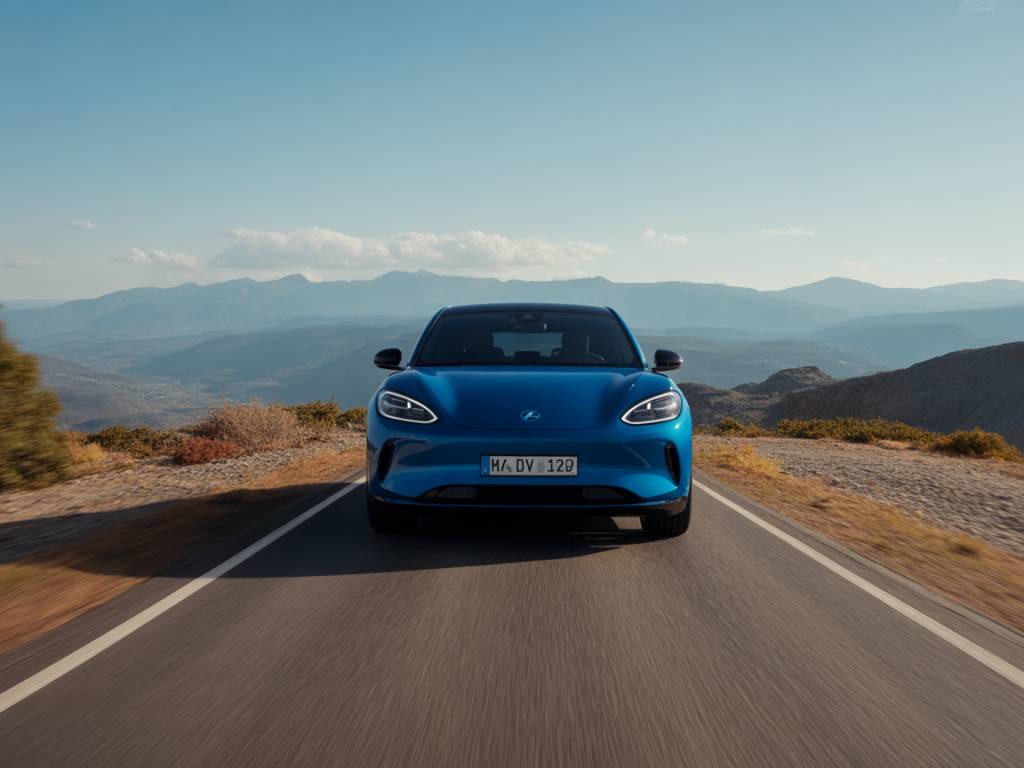
Why an EV test drive needs a different checklist
Test driving an electric car is not the same as hopping into another petrol hatchback for a quick spin around the block. On paper, most EVs look brilliant: instant torque, low running costs, “up to” 300+ miles of range. In reality, the way the car fits into your daily life can be very different from what the brochure suggests.
Buyer’s remorse with EVs tends to come from hidden compromises you don’t notice in a 15-minute drive: poor efficiency in winter, annoying charging quirks, uncomfortable seats on longer trips, or driver assistance systems that never stop beeping. The goal of your test drive is simple: stress-test the car before you sign anything.
Here’s how to do that in a focused, practical way.
Before you step into the car: prepare your real-life use case
Dealers will happily send you on a gentle city loop that flatters the car. You need to arrive with a plan that matches how you actually drive.
Ask yourself:
- What’s my typical daily mileage? 10 miles in town or 60 miles of motorway?
- How often do I do long trips? Twice a year to see family, or twice a month for work?
- What’s my home charging situation? Driveway with 7 kW wallbox, shared car park, or street parking only?
- Who will regularly be in the car? Solo driver, small children, teenagers, adults in the back?
- What am I carrying? Pushchairs, sports kit, tools, dog crate?
Bring this up with the salesperson. Tell them you want a route that includes your typical roads: some 70 mph motorway or dual carriageway, some urban traffic, and if you live rurally, a bit of B-road as well.
Range and efficiency: test the real, not the brochure
The number on the brochure (WLTP range) is a lab figure. Your test drive is your chance to see how the car behaves in your climate and on your roads.
Before you set off, note down:
- Battery state of charge (%)
- Indicated remaining range (miles or km)
- Trip computer energy consumption (kWh/100 km or mi/kWh)
Then, after at least 20–30 miles of mixed driving, check again. You’re looking for a pattern:
- If you’ve driven 30 miles and the range has dropped by 45, that “300-mile” car behaves more like a 200-mile car in your usage.
- If consumption spikes on the motorway (common), you may need a bigger battery than you thought for regular long trips.
Pay attention to conditions:
- Cold weather? Turn on cabin heating and heated seats as you normally would in winter and watch the consumption climb.
- Fast driving? A sustained 70–75 mph is where drag really punishes range. Several EVs can lose 30–40% of their “official” range at motorway speeds.
Your aim isn’t perfect maths. You just want a realistic feel for: “On a cold, wet day, will this car comfortably do my regular loop with 20–30% battery spare?” If the answer is marginal, think carefully.
Charging in the real world: simulate your future routine
Charging is where many new EV owners get nasty surprises. On the test drive, you want to understand how the car behaves at home-like speeds (AC charging) and what happens on a rapid charger.
Questions to ask about home and workplace charging:
- What’s the maximum AC charging speed the car supports? (7 kW, 11 kW, 22 kW?)
- How many hours from 10–80% on a typical 7 kW home charger?
- Does the car support scheduled charging and off-peak tariffs? Try setting a schedule in the menus.
- Can you preheat or precool the car while plugged in? Test it if possible.
If you can, include a DC fast-charging stop in your test:
- Ask the dealer to start the test at around 20–40% battery so you can plug into a rapid charger en route.
- Check how easy it is to find a fast charger via the car’s navigation. Does it filter by speed (50 kW, 150 kW, 350 kW)?
- Time how long it takes from plugging in to actually charging. Some cars are quicker than others at “handshaking” with the charger.
- Watch the charging power on the screen. Does it hit anything close to the claimed peak rate, or does it sit much lower?
Also look for “little” things that become big irritations:
- Is the charging port in a sensible place for reversing into bays?
- Is the port door easy to open with cold or wet hands?
- Do you get clear feedback in the cabin and on your phone that charging has started?
Performance and braking: beyond the “EV wow” factor
Almost every EV feels quick off the line. That instant punch can hide flaws in how the car behaves once the novelty wears off.
On your test drive, pay attention to:
- Mid-range acceleration: 30–70 mph for motorway joining and overtaking. Does it still pull strongly or does it run out of breath?
- Throttle response: Is it easy to drive smoothly, or is it jerky at low speeds in town or traffic?
- Traction: On wet roads, does it scrabble for grip off the line? Some powerful EVs spin wheels too easily in the rain.
Regenerative braking is crucial.
- Can you adjust regen levels easily (paddles, menu, drive modes)?
- Is there a true “one-pedal” mode that brings you to a stop, and do you like it?
- Does the brake pedal feel consistent when the car blends regen and friction brakes, or does it feel grabby or vague?
You want a car that lets you brake predictably and comfortably in all situations. If you leave the test drive with a slight headache from jerky stops, that won’t improve over three years.
Ride, comfort and ergonomics: test it like you already own it
Comfort compromises usually appear after the honeymoon phase, not on day one. The test drive is your chance to accelerate that learning.
Spend time while parked just sitting and adjusting things:
- Can you find a relaxed driving position with good thigh support and no pressure points?
- Is headroom okay in front and rear, especially with panoramic roofs?
- Do you knock your knee on any hard plastics or console edges?
Then, on the move, check:
- Ride comfort: How does it handle speed bumps, potholes and expansion joints? Big wheels often look great and ride terribly.
- Noises and vibrations: With no engine sound, you’ll notice tyre roar, wind noise and rattles. Are they acceptable at 70 mph?
- Rear-seat comfort: If you regularly carry passengers, get someone to sit in the back and ask them honestly how it feels.
Don’t forget practicalities:
- Is the boot opening wide and low enough for what you carry?
- How much space is there with the seats folded, and is the floor flat?
- Is there a frunk for charging cables? Try actually putting the cable bag in and out.
Infotainment and controls: live with the tech for an hour
This is where many EVs fall down. A great drivetrain with awful software makes for an annoying ownership experience.
Before you drive away, spend 10–15 minutes on the following:
- Basic controls: Can you adjust the climate, fan speed and heated seats without diving through three menus?
- Physical buttons vs touch: Are essential functions on proper buttons, or do you have to prod a screen on a bumpy road?
- Phone integration: Connect your phone via Apple CarPlay or Android Auto. Does it connect reliably and quickly?
- Navigation: Try entering an address and a public charger. Is it logical and fast?
On the move, notice:
- Screen glare: Is the central display readable in bright sunlight?
- Responsiveness: Any lag or freezes in the menu system?
- Driver display: Do you get clear, simple information about range, speed and navigation, or is it cluttered?
Software updates can fix some issues, but they rarely turn a frustrating interface into a brilliant one. If the tech annoys you in an hour, imagine it in rush-hour traffic after a long day.
Driver assistance and safety: help or hindrance?
Modern EVs lean heavily on advanced driver assistance systems (ADAS). Some are genuinely useful; others feel like nagging backseat drivers.
During your test drive, deliberately turn on and try:
- Adaptive cruise control: Does it brake and accelerate smoothly? Does it leave a gap you’re comfortable with?
- Lane-keeping assistance: Does it gently guide you or keep ping-ponging between lane lines?
- Traffic sign recognition: Is it accurate, or does it misread signs and beep unnecessarily?
- Parking aids: Try reversing into a tight space. Are the cameras clear? Is the 360° view helpful or confusing?
Then ask the crucial usability questions:
- Can you easily disable the systems you don’t like, and do they stay off or re-enable every time you restart the car?
- Is there a clear, simple way to adjust alert volume and sensitivity?
If you find yourself thinking “this would drive me mad on a commute”, believe that instinct.
Energy management and driving modes: how flexible is the car?
EVs manage power, heating and range differently. You want a car that gives you enough control without constant micromanagement.
Play with:
- Drive modes: Eco, Normal, Sport. How do they affect throttle response, climate performance and steering feel?
- Eco limits: Does Eco mode make the car unbearably sluggish or reduce heating to the point of discomfort?
- Battery and range info: Can you see estimated range for each drive mode? Can you display % and miles simultaneously?
If available, also check:
- Route-based range prediction: Does the sat-nav adjust your expected battery at destination as you drive?
- Preconditioning: Can you set the car to warm or cool the cabin and battery before departure, especially in winter?
The more transparent the car is about what it’s doing with your energy, the easier it is to avoid nasty surprises on long trips.
Noise, refinement and “EV fatigue”
At first, EV silence feels luxurious. Over time, other noises take centre stage. Use your test drive to listen critically:
- On a smooth road at 30 mph, is it genuinely quiet, or can you already hear tyre roar?
- At 70 mph, is wind noise around mirrors and pillars intrusive?
- Any squeaks, rattles or buzzes from the interior over rough surfaces?
Also think about mental fatigue:
- Are there constant alerts and chimes for speed limits, cameras, lane departures?
- Does the car nag you to keep your hands on the wheel in a heavy-handed way when using assistance systems?
An EV should reduce stress, not add a different kind of irritation.
Cost and value: use the test drive to check the numbers
While you’re still in “test” mode, pressure-free, sanity-check the financial side with the salesperson using specifics about your usage.
- Ask for a realistic range estimate at motorway speeds in winter, not just the WLTP number.
- Discuss service intervals and typical maintenance costs for brakes, tyres and cooling systems.
- Check the warranty on the high-voltage battery (years and mileage) and what capacity loss is covered.
- If they quote charging costs, make sure they’re using current electricity prices and not outdated tariffs.
If possible, compare it directly with a similar petrol or hybrid you know well. Work out:
- Your approximate monthly fuel/energy cost based on your mileage.
- Any savings from congestion charges, low emission zones or parking benefits.
- Home charger installation costs and grants, if relevant in your region.
The best EV for you is the one that fits both your lifestyle and your spreadsheet, not just the one that feels quickest when you floor it.
Final checks: can you live with this car for years?
When you return the keys, take five minutes to walk around the car and mentally replay the drive. Ask yourself honestly:
- Did anything annoy me even a little?
- Was there something I had to “work around” rather than simply use?
- Would I happily do a 3-hour trip in this car tomorrow?
- Does the charging and range behaviour fit my real-world life, not my idealised one?
If you can, try to arrange an extended or overnight test drive. Living with the car for 24–48 hours — parking it at home, charging it, loading it with your family or kit — reveals more than any brochure ever will.
Use your EV test drive not to fall in love with the tech, but to audition the car as a daily partner. The more deliberately you push it in the situations that matter to you, the less chance you’ll discover hidden compromises after you’ve already signed on the dotted line.