
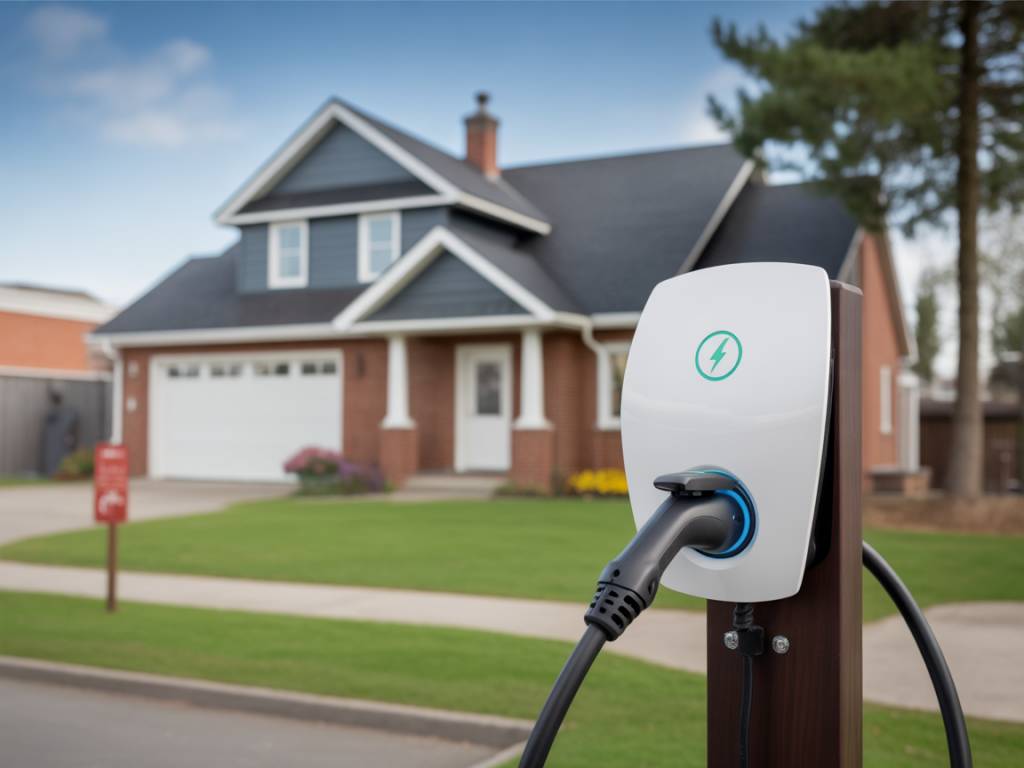
Public charging has its place, but if you drive an EV daily, a home charger quickly stops being a gadget and becomes an essential tool. It decides how flexible your car feels, how much you pay per mile, and how often you have to think about charging at all.
The trouble is, the market is now full of boxes that all look the same and promise “smart charging”, “solar integration” and “future proofing”. Some are excellent, some are overpriced, and a few will just add headaches to your wall.
Let’s strip it back. In this guide, we’ll look at which home charger suits your situation, what really matters in the spec sheet (and what doesn’t), and how to get it installed safely and affordably without paying for features you’ll never use.
Do you actually need a home charger?
Before you spend £800–£1,200 on hardware and installation, it’s worth checking whether a dedicated wallbox really makes sense for you.
A home charger is probably right for you if:
- You drive more than 5,000–6,000 miles per year.
- You can park off-street (driveway, garage, private parking space).
- Your car is plugged in most nights or at least a few nights per week.
- You want to use cheap off-peak electricity (EV or night tariff).
You can probably live with the standard 3‑pin “granny charger” if:
- You drive very little (local trips, under 3,000 miles per year).
- You have no option for a proper wallbox (no off‑street parking, landlord issues).
- You’re waiting on a more permanent solution (new build, upcoming driveway works).
Rule of thumb: if your EV is your main car and you own or have long‑term access to your parking spot, a wallbox is almost always worth it. The combination of faster charging, better safety, and access to the best tariffs usually pays back within a few years.
Power rating: 3.6 kW, 7 kW or 11+ kW?
This is the first big spec decision, and it sounds more complicated than it is.
Most UK home chargers fall into two brackets:
- 3.6 kW (16 A, single‑phase): adds roughly 10–15 miles of range per hour of charging.
- 7.2 kW (32 A, single‑phase): adds roughly 20–30 miles of range per hour of charging.
What you need depends on your driving pattern and your home electrics.
7 kW: the default choice for most drivers
If your board and supply can handle it, a 7 kW unit is usually the sweet spot:
- Most compatible with modern EVs (nearly all will charge at 7 kW AC single‑phase).
- Comfortably fills a typical battery overnight, even from low state of charge.
- Gives you flexibility if your mileage increases or you buy a larger‑battery EV later.
When 3.6 kW makes sense
- Your existing supply or consumer unit is limited, and an upgrade would be expensive.
- You only do short daily trips and the car sits at home for long periods.
- You’re in a flat or older property where pulling 32 A is a stretch.
If your car is parked from 6 pm to 7 am, even a 3.6 kW charger can add 150+ miles overnight on many EVs. For low‑mileage drivers, that’s plenty.
What about 11 kW or 22 kW?
These higher powers require three‑phase electricity, which is rare in UK homes. Even if you had access, most cars will top out at 11 kW on AC, and the cost to upgrade your supply wipes out most of the benefit.
In practice: for a normal house, focus on 7.2 kW. If your installer or DNO says you’re limited, a 3.6 kW unit is still vastly better than a 3‑pin plug.
Tethered vs untethered: cable on or cable off?
This is more than an aesthetic choice. It’s about daily usability.
Tethered charger (fixed cable)
- Thick cable is permanently attached, usually 5–7.5 m long.
- You just unhook and plug in – no unpacking from the boot.
- Feels more like using a fuel pump: park, plug, done.
Pros:
- Most convenient if you charge frequently.
- Harder to “forget the cable” at a public charger, because you never take it out.
- Often slightly cheaper than buying a separate quality cable.
Cons:
- Less visually discreet; there’s always a cable visible on your wall.
- If the cable gets damaged, you may need a repair or replacement of the whole unit.
Untethered charger (socket only)
- Looks neater – just a socket when not in use.
- Lets you lock your Type 2 cable in the car and only take it out when needed.
- Handy if you occasionally charge visitors with different cable needs.
Pros:
- Cleaner look, especially on a visible wall or modern house façade.
- Easier to swap cables if you change car or want a longer lead later.
Cons:
- One more step every time: get cable, plug into charger, then into car.
- People do occasionally drive off and leave their cable at a public charger.
If you charge most days, a tethered unit is usually worth it just for the convenience. If you’re particular about the look of the house or your charger is in a shared car park, untethered is tidier and more flexible.
Smart features: useful tools or marketing fluff?
Almost every charger sold today is labelled “smart”. In theory, that means it can talk to your phone, your meter, your energy supplier, and possibly your coffee machine. In practice, three features actually matter:
- Scheduled charging: setting start/stop times to use cheap off‑peak tariffs.
- Load balancing / dynamic load management: avoiding overloading your main fuse when the oven, shower and charger are all running.
- Energy monitoring: seeing exactly how many kWh go into your car and what that costs you.
Most decent chargers now do all three. The differences are in how reliable and simple the apps are. This matters more than whether the box claims “AI optimisation” or fancy smart home integration.
Things to watch for:
- App reliability: check reviews in the App Store / Google Play, not just on the manufacturer’s site.
- Ongoing costs: some systems hide advanced features (tariff integration, solar control) behind subscriptions.
- Tariff support: if you’re on an EV tariff like Octopus Intelligent or similar, check if the charger is on their approved list.
Solar integration is genuinely useful if you have panels: you can choose to charge only from surplus solar, or blend solar with grid power. But if you don’t have PV and don’t plan to install it, don’t pay a premium for solar‑ready bells and whistles “just in case”.
Safety first: what a proper installation should include
EVs pull a high, steady load for hours at a time. That’s different from most household appliances, and it exposes weak links in old wiring very quickly. This is where cutting corners becomes dangerous.
A safe, compliant installation in the UK should include:
- Dedicated circuit: the charger must be on its own circuit from your consumer unit, correctly rated for 16 A or 32 A as appropriate.
- RCD protection: usually a Type A RCD with DC leakage protection (either built into the charger or in a separate device).
- Correct cable sizing: scaled to the length of run, installation method, and load. Long runs need thicker cable.
- Isolation switch: a local isolator near the charger to safely power down for maintenance.
- Compliance with IET Code of Practice and BS 7671: your installer should be familiar with both, not just “good with electrics”.
At survey stage, a good installer will:
- Check the main fuse rating (often 60–100 A) and your overall load profile.
- Assess the condition and capacity of your consumer unit.
- Discuss where the charger will be mounted, the cable route, and any drilling / making good needed.
If they’re ready to fit a 7 kW unit without asking for a few basic details and photos first, be cautious. A few extra questions now are cheaper than a melted cable or nuisance tripping later.
How much should you realistically expect to pay?
Prices vary by region and complexity, but for a typical UK home with a straightforward install, you’re looking at:
- Charger hardware: £400–£800 depending on brand and features.
- Standard installation: £300–£600 for a run of up to, say, 10–15 metres and no major civil works.
So a realistic range is around £700–£1,400 all‑in for most homes.
Costs rise when:
- The cable run is long or needs ground works (across a driveway, for example).
- Your consumer unit needs upgrading or you require a new sub‑board.
- The main fuse needs uprating by your DNO (often free, but not always quick).
- You add extras such as earth rods, bollards, posts or complex cable concealment.
Be wary of headline “from £299 installed” offers. Once they add realistic extras (longer cable runs, drilling, isolator, proper protections), the final invoice can look very different. Always get a clear, itemised quote based on your specific property, not a generic online tick‑box.
Choosing the right installer
You can either:
- Buy a charger and arrange your own electrician.
- Use an installation package from a charger brand or specialist EV installer.
Whichever route you choose, check the following:
- EV experience: has the electrician installed many EV chargers, or is this their first?
- Accreditation: Ideally registered with a competent person scheme (NICEIC, NAPIT, etc.).
- Paperwork: you should receive an installation certificate and test results, not just a receipt.
- Aftercare: who do you call if something trips or the charger goes offline next month?
It can be tempting to get “a mate who’s an electrician” to wire it cheaper. Unless they are genuinely up to speed with EV standards and you’re sure the work will be tested and certified, this is a false economy. Your car and home are both expensive – this isn’t the place to save £100.
How to keep the total bill down without compromising safety
There are smart ways to control costs without touching safety‑critical elements.
- Keep the cable run short: place the charger as close as practical to your consumer unit to reduce labour and copper costs.
- Avoid cosmetic extremes: chasing cables into walls and fully invisible routes look tidy, but they add significant time and money.
- Choose features you’ll actually use: if you don’t have solar, don’t pay extra for complex PV control. If you’re not into apps, a simple, reliable smart charger beats a “connected ecosystem” you’ll never open.
- Ask about fuse upgrades early: if your main fuse is 60 A and you have an electric shower and induction hob, check with your DNO about a free upgrade before committing to a 7 kW charger.
Also check whether your energy supplier or car manufacturer offers any discounts or bundled deals. Some give money off specific charger brands or cover part of the installation if you sign up to their tariff.
Everyday usability: what makes a charger a pleasure (or a pain) to live with
Spec sheets rarely mention the small details that decide whether you enjoy using your charger or quietly resent it every night.
- Cable length: too short, and you’ll be constantly reversing and re‑parking; too long, and you’re wrestling a heavy snake. Around 5–7.5 m works for most driveways.
- Socket/cable angle: check where the cable exits the box and how it will naturally fall. You don’t want it dragging over sharp brick corners or blocking a pathway.
- Weather resistance: UK weather means the unit should be well‑rated for rain and cold. Look for a decent IP rating (e.g. IP54 or better) and a solid build.
- Physical robustness: it will eventually get knocked by bikes, bins or kids. A sturdy casing is worth more than fancy LEDs.
- App simplicity: you shouldn’t need a manual every time you want to tweak a schedule. A simple, clear interface is far more valuable than extra menus.
If you can, ask to see a working example at a dealer, a friend’s house, or a showroom. Five minutes of actual use will tell you more than ten pages of brochures.
Matching the charger to your car and energy tariff
Your EV, charger and electricity tariff should work together, not fight each other.
Car compatibility
- Most modern EVs use a Type 2 AC socket and will charge happily from any Type 2 home charger.
- Some cars have their own smart charging features and scheduling. Decide whether you want to control charging from the car, the charger, or your tariff app – and stick mainly to one to avoid conflicts.
Tariff optimisation
- If you’re on a cheap off‑peak tariff, make sure your charger or car schedule is set to start at the right time and doesn’t accidentally run into expensive peak hours.
- Check whether your chosen charger integrates with your supplier’s “smart” or “intelligent” EV tariff; some can automatically shift charging to the lowest‑cost half‑hours for you.
Done right, this is where a home charger really pays for itself: charging at 8–12p/kWh off‑peak instead of 70p+/kWh at rapid public chargers changes the long‑term running costs completely.
Bringing it all together: choosing with your real life in mind
When you strip away the marketing, the “right” home charger is simply the one that:
- Charges fast enough for your driving pattern (usually 7 kW, sometimes 3.6 kW).
- Fits your property’s electrical limits without needing eye‑wateringly expensive upgrades.
- Is safe, properly installed and certified.
- Is easy enough to use that you barely think about it after the first week.
- Works smoothly with your EV and energy tariff to keep per‑mile costs down.
If you keep those points in mind, the choice becomes much clearer. Focus on cable type and length, smart features you’ll genuinely use, and an installer you trust. Ignore the buzzwords, scrutinise the app reviews, and don’t be shy about asking installers detailed questions – a good one will be happy to talk through options and constraints.
Get those basics right, and your home charger will quietly do the most important job of all: turning your driveway into your own personal “fuel station” that’s always open, always reserved for you, and significantly cheaper per mile than anything you’ll find on the petrol forecourt.